

Blog
Moroccan Mint Tea: A Guide to the North African Classic

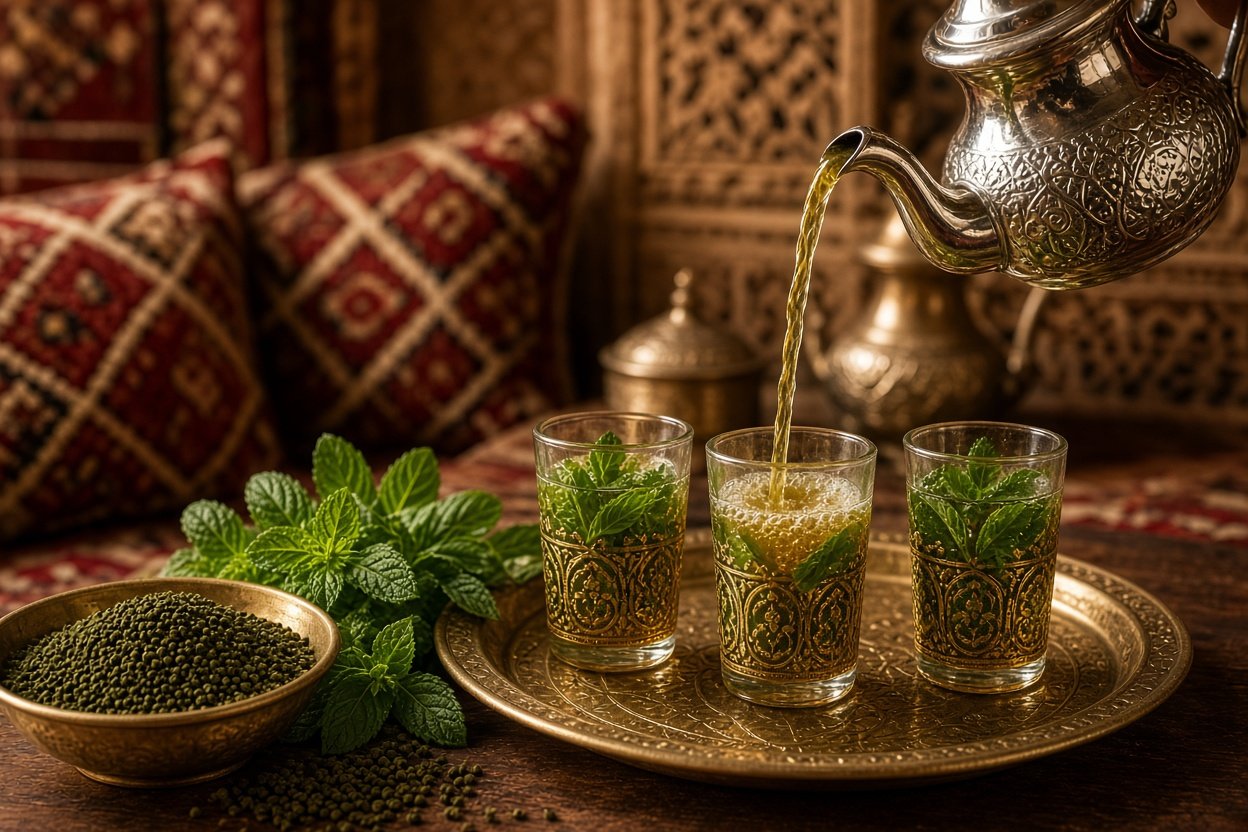
Moroccan mint tea, known locally as “atay,” is made by brewing green tea with fresh spearmint and sweetening it slightly, served strong from a teapot poured from a height to create a light foam. In Morocco, it’s a daily ritual and a mark of hospitality.
How it’s traditionally made
The classic method uses Chinese gunpowder green tea, rolled into small pellets, brewed with a generous handful of fresh spearmint and sweetened with sugar to taste. The tea is often poured, cooled, and poured back into the pot once or twice before serving, which is part of what gives it its characteristic strength and the light layer of foam on top. This pouring technique is as much a part of the ritual as the ingredients themselves.
How to brew Moroccan mint tea at home
- Add your Moroccan mint tea to a teapot or cafetière.
- Pour freshly boiled water over it and let it steep for 3 to 5 minutes.
- Strain into small glasses or heatproof cups. Traditionally it’s served without milk.
- Add sugar to taste if you’d like it closer to how it’s served in Morocco, or leave it unsweetened for a cleaner, greener cup.
Hot or iced
While it’s traditionally served hot, this tea also makes a refreshing iced drink in summer. Brew it a little stronger than usual, let it cool, and pour over ice with a sprig of fresh mint.
Why it’s served in small glasses
In Morocco, tea is usually served in small, ornate glasses rather than mugs, partly tradition and partly practical: the tea is often poured quite hot and in small amounts, so a smaller glass suits the serving style better than a large cup would. The glasses are often refilled several times through a visit, rather than one large cup being served once.
The tradition behind it
Tea was introduced to Morocco in the 18th century and became woven into everyday hospitality, often served to guests as a sign of welcome. Offering a glass of mint tea to a visitor remains a common gesture across Morocco and much of North Africa today. You can read more about its history on Wikipedia’s entry on Maghrebi mint tea.
Try it for yourself
Our Strong Authentic Moroccan Mint Tea combines gunpowder green tea with real mint for an authentic cup. If you’d prefer something caffeine-free in the evening, our guide to chamomile tea is a gentler alternative.
Frequently asked questions
Does Moroccan mint tea contain caffeine?
Yes. It’s made with green tea, so it does contain some caffeine, generally less than black tea or coffee.
What kind of mint is used in Moroccan mint tea?
Traditionally, fresh spearmint is used rather than peppermint, giving a milder, sweeter mint flavour than a peppermint-based tea would have.
Can I make it without a teapot?
Yes. A cafetière or any heatproof jug works well; you don’t need traditional Moroccan teaware to brew a good cup at home.
How much sugar is traditionally used?
Traditional Moroccan mint tea is often quite sweet, but the amount varies by household and taste. At home, it’s easy to start with less and adjust, since sugar is simple to add but not to take away.
Can I use dried mint instead of fresh?
Fresh spearmint gives the most authentic flavour, but a good quality dried mint tea, like ours, is a practical everyday alternative that still gives a genuine minty cup.
Is Moroccan mint tea the same as regular mint tea?
Not quite. Regular mint tea is often just mint on its own, while Moroccan mint tea always includes green tea as its base, giving it more body and some caffeine that a plain mint infusion wouldn’t have.