

Blog
Black Seed Explained: Honey, Oil & Bitters

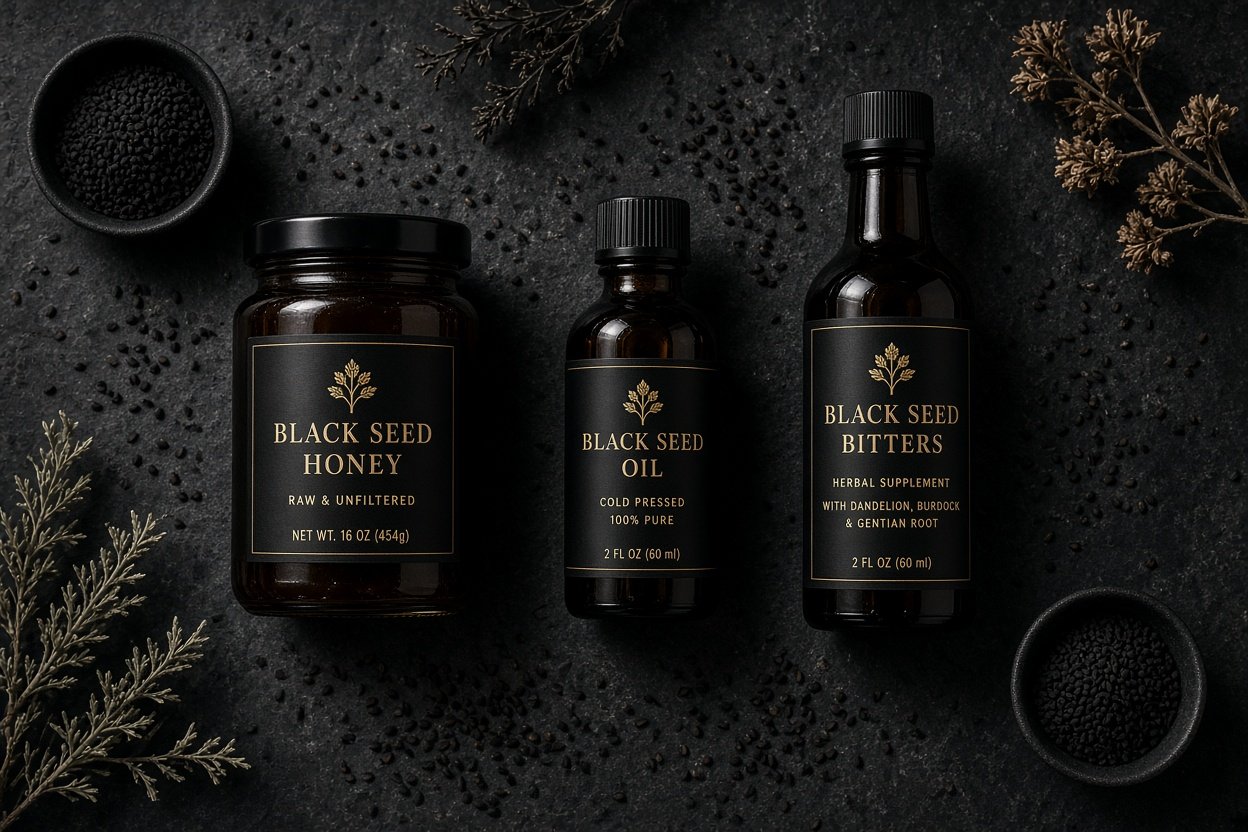
Black seed, also known as Nigella sativa or black cumin, is one of those ingredients that shows up in several different forms, and the black seed benefits people look for shift slightly depending on whether you reach for the honey, the oil, or the bitters.
What Is Black Seed?
Nigella sativa is a flowering plant whose small black seeds have been used across the Middle East, North Africa and South Asia for centuries, both in cooking and in traditional practice. The seeds themselves have a slightly bitter, peppery flavour, which comes through in whichever form they’re prepared.
Honey, Oil or Bitters: What’s the Difference?
Black seed honey is raw honey infused with the seed, combining natural sweetness with black seed’s distinctive flavour — a straightforward way to add it to your routine, stirred into tea or taken by the spoonful. Black seed oil is pressed from the seeds themselves, used in small measured amounts rather than by the spoonful. Black seed bitters are a liquid preparation, taken in small doses, often alongside other bitter herbs.

The Black Seed Benefits Behind Each Form
Black seed’s long history of traditional use spans general wellness support, and each format offers a different way to access the same underlying seed. Honey is the gentlest and easiest to build into a daily habit; oil is more concentrated and used in smaller, measured doses; bitters sit somewhere in between, taken as a small daily dose rather than a spoonful.
Shop the Range
Our Pure Honey Infused with Black Seed is the easiest starting point, our Strong Black Seed Oil suits those who prefer measured drops, and our Super Blackseed Bitters is a traditional bitters preparation.
Black Seed Alongside Other Traditional Blends
Black seed is also a key ingredient in some of our tea blends, paired with soursop and ginger for a distinctive, traditionally rooted cup. Our guide to soursop, black seed and ginger tea covers that specific combination, if you’d rather try black seed in tea form than as honey, oil, or bitters.
A Long History
Black seed has been documented in use for thousands of years across the Middle East and beyond, and it remains a common household ingredient in many of those traditions today. Read more on Wikipedia’s Nigella sativa entry.
How Black Seed Fits Alongside Other Traditional Remedies
Black seed rarely appears in isolation within traditional practice — it’s typically one ingredient among several, paired with honey, other seeds, or specific herbs depending on the tradition and region. Understanding it as part of a wider toolkit, rather than a single standalone remedy, reflects how it’s actually used across the cultures where it has the longest history.
Choosing the Right Format for You
If you’re new to black seed altogether, honey is the gentlest and most forgiving place to start, since it’s dosed the same way you’d use any honey and carries none of the precision required for oil or bitters. Oil and bitters are better suited to anyone who already knows how much they want to take and prefers a more concentrated, targeted format.
Black Seed in Cooking
Beyond honey, oil, and bitters, whole black seeds are also used directly in cooking across the regions where the plant is traditional — sprinkled over bread, stirred into curries, or used whole in spice blends. The forms covered here are the more concentrated, wellness-focused ways to use the same seed, distinct from its everyday culinary role.
A Note on Quality
As with most concentrated natural products, quality varies between suppliers, and it’s worth looking for black seed oil and bitters that state their source and processing method clearly rather than a vague, generic label, since this generally tracks with a more carefully made product.
What the Seed Actually Tastes Like
On its own, black seed has a flavour often described as a cross between onion, oregano, and black pepper — bitter and slightly sharp, with a peppery finish. This is part of why it’s rarely eaten in large quantities on its own and more often blended into honey or used sparingly as an oil.
Storing Black Seed Products
Black seed oil in particular is best kept away from heat and direct light to preserve its potency, ideally in a cool cupboard rather than near a stove or a sunny windowsill. Honey and bitters are generally more stable, but still benefit from being stored somewhere consistent rather than somewhere that fluctuates in temperature.
Black Seed Oil in a Skincare Routine
Beyond internal use, black seed oil is also used topically by some as part of a skin or scalp routine, valued in traditional practice for its rich, concentrated texture in much the same way castor or rosemary oil are used elsewhere on this site. As with any concentrated oil applied to skin, it’s worth patch testing a small area first, particularly for anyone with sensitive skin or known allergies to seed oils.
Who Should Be Cautious
Black seed oil and bitters are more concentrated than the honey format, so it’s especially worth checking with a healthcare professional before use if you’re pregnant, breastfeeding, on blood-thinning or blood-sugar medication, or managing a chronic health condition.
Black Seed’s Long History Across Traditions
Black seed’s use stretches back thousands of years across the Middle East, North Africa, and South Asia, and it’s referenced in traditional practices from several different regions and cultures independently, which is part of why it’s earned such a broad, enduring reputation across such a wide geographic area. Few traditional ingredients show up so consistently across that many distinct culinary and wellness traditions at once.
Combining Black Seed With Other Ingredients
Beyond the soursop and ginger tea blend mentioned above, black seed is often paired with honey specifically because the two have a long shared history in traditional practice — honey softens black seed’s peppery bitterness while adding its own natural sweetness, making the combination more palatable than either ingredient taken entirely on its own.
Frequently Asked Questions
Which form should I start with?
Black seed honey is the easiest to work into a daily routine, since it can simply be stirred into tea or spread as you would any honey.
How much oil should I use?
Black seed oil is potent, so it’s used in small amounts — follow the guidance on the product rather than treating it like a cooking oil.
Does black seed have a strong taste?
Yes, it’s slightly bitter and peppery on its own, though the honey format softens this considerably.
Should I check with a doctor first?
As with any concentrated herbal product, especially the oil and bitters, check with a healthcare professional before use if you’re pregnant, breastfeeding, on medication or managing a health condition.
Ready to explore black seed for yourself? Start with our Pure Honey Infused with Black Seed and work out which format suits you.
This article is for general wellness information and isn’t a substitute for medical advice.