

Blog
Herbal Oils 101: Castor, Rosemary, Avocado & Oregano

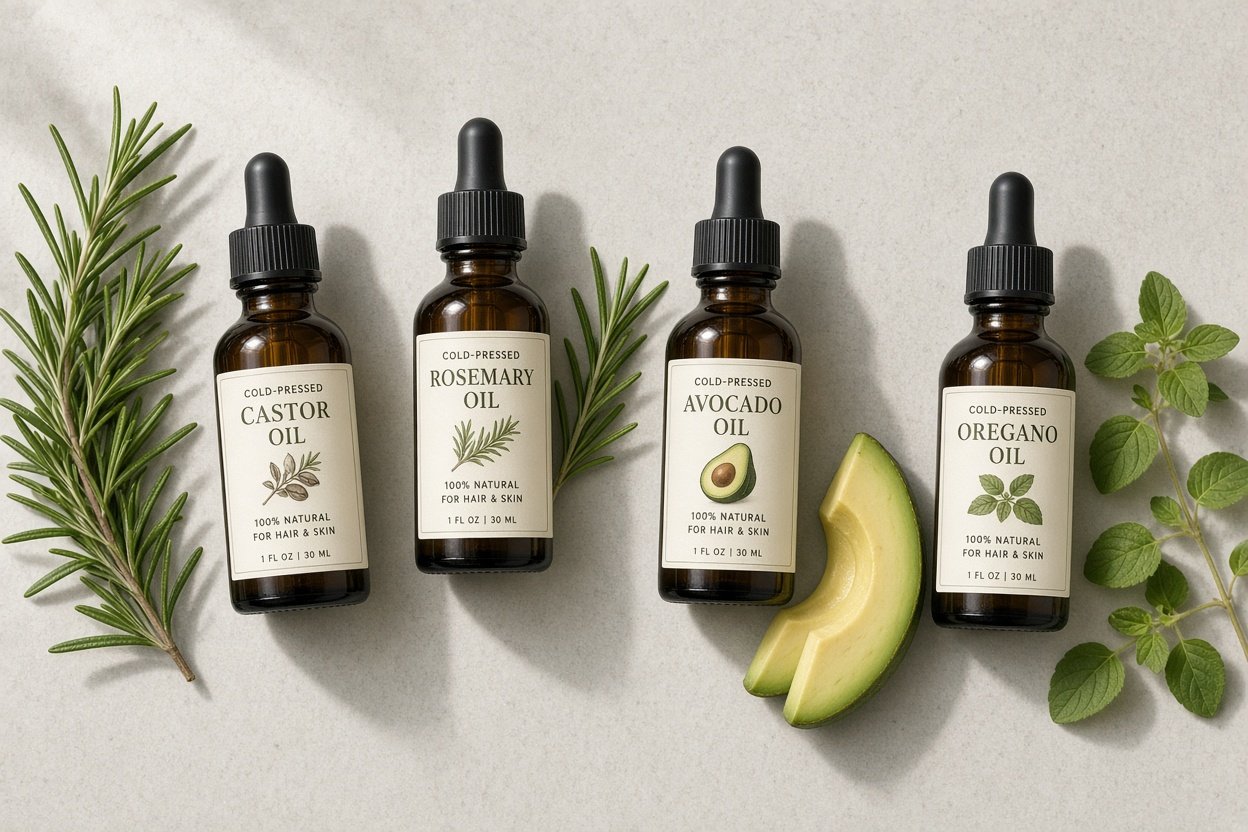
Herbal oils cover a wide range of uses, and choosing the right herbal oils for hair and skin comes down to matching the oil’s texture and strength to what you’re actually trying to achieve. Here’s a quick guide to four of the most common: castor, rosemary, avocado and oregano.
Castor Oil
Castor oil is a thick, rich oil pressed from castor beans, most commonly used in hair and skin care routines. It’s often massaged into the scalp or ends of hair, or used sparingly on skin, thanks to its dense, moisturising texture.
Rosemary Oil
Rosemary oil is a lighter oil often paired with castor oil for scalp care, typically mixed together rather than used entirely on its own. It carries the familiar herbal scent of the rosemary plant, extracted from the same herb widely used in cooking — you can read more about the plant on Wikipedia’s rosemary entry.

Avocado Oil
Avocado oil is a versatile oil that works both in cooking and in skin care, valued for its mild, nutty flavour when used in the kitchen and its light texture when applied to skin.
Oregano Oil
Oregano oil is a concentrated oil pressed from the oregano plant, much stronger than the herb itself, and it’s typically used in small measured amounts rather than applied liberally.
Shop Herbal Oils
Explore our Pure Castor Oil, Rosemary Oil, Pure Avocado Oil or the pre-blended Rosemary and Castor Oil for hair, and our Strong Oregano Oil.
How to Choose Between Herbal Oils for Hair and Skin
If you’re focused on hair, castor and rosemary (or the two blended together) are the natural starting point. For general skin care or cooking, avocado oil is the more versatile choice. Oregano oil is different again, used in small amounts rather than as a daily skin or hair product.
A Note on Scent
Each of these oils carries its own distinct natural scent — rosemary’s herbal sharpness, avocado’s mild nuttiness, oregano’s pungency — and unlike many commercial products, there’s no added fragrance masking it, so it’s worth being comfortable with an oil’s natural smell before committing to using it regularly.
Layering Oils in a Routine
Some people use more than one of these oils together — castor and rosemary blended for the scalp, with avocado used separately as a facial or body moisturiser. There’s no rule against combining oils across a routine, as long as each is used at the concentration and frequency it’s designed for.
Skincare Oils Beyond This List
Castor, rosemary, avocado, and oregano are far from the only herbal oils worth knowing. Shea butter and batana oil are two more natural staples specifically for hair and skin — our guide to shea butter and batana oil covers those, if you want to round out a fuller natural skincare routine.
How Often to Use Each Oil
Castor and rosemary for hair are typically used a few times a week rather than daily, given their rich texture. Avocado oil is gentle enough for daily use on skin, while oregano oil is reserved for occasional, targeted use given its strength — using it more frequently doesn’t add benefit and increases the chance of irritation.
Applying Oils Correctly
For hair oils like castor and rosemary, warming a small amount between your palms before applying helps it spread more evenly and absorb more easily than applying it cold straight from the bottle. For skin, a little goes further than expected — most of these oils are rich enough that a small amount covers a surprising area.
Patch Testing Before Regular Use
Before adding any new oil to a regular routine, applying a small amount to an inconspicuous patch of skin and waiting 24 hours is a simple way to rule out an unexpected reaction, particularly with a more concentrated oil like oregano. This is a quick, low-effort step that’s easy to skip but worth doing once before committing to daily or weekly use.
Reading Labels Before You Buy
Look for oils labelled cold-pressed or unrefined where possible, since these processing methods tend to preserve more of the oil’s natural character than heavily refined versions. This matters most for oils used directly on skin or hair, less so for something like oregano oil used in tiny, diluted amounts.
Herbal Oils vs Commercial Hair and Skin Products
Compared to many commercial hair and skin products, herbal oils like these typically contain a single ingredient rather than a long list of additives, fragrances, and preservatives, which appeals to anyone specifically looking to simplify their routine down to natural, recognisable ingredients. The trade-off is that a single-ingredient oil doesn’t offer the same texture or scent as a formulated product, so it’s worth adjusting expectations accordingly when switching from one to the other.
A Simple Starter Routine
If you’re new to herbal oils altogether, a reasonable starting point is one hair oil (castor, rosemary, or the pre-blended combination) and one skin oil (avocado), used consistently for a few weeks before deciding whether to add oregano oil or anything more targeted into the mix.
Why Cold-Pressed Matters for Herbal Oils
Cold-pressing extracts oil from a plant without using heat, which tends to preserve more of its natural character — scent, colour, and the subtle compounds that give each oil its particular qualities — compared to oils extracted using heat or chemical solvents. This distinction matters more for oils you’re applying directly to hair or skin, like castor, rosemary, and avocado, than for something used in smaller diluted amounts.
Building Herbal Oils Into a Weekly Routine
Rather than trying to use every oil every day, many people find it easier to assign each one a rough place in a weekly rhythm — a castor and rosemary scalp treatment once or twice a week, daily avocado oil on the skin, and oregano oil reserved for occasional, specific use. Thinking of herbal oils as a small weekly system, rather than one product to reach for constantly, tends to make a routine easier to stick with.
Frequently Asked Questions
Can I mix these oils together?
Yes, castor and rosemary are commonly blended for hair care, and our pre-mixed version does exactly that.
How much oregano oil should I use?
It’s concentrated, so use it sparingly and follow the guidance on the product rather than treating it like a carrier oil.
Can I use these oils on sensitive skin?
Everyone’s skin reacts differently, so it’s a good idea to patch test a small area first, especially with stronger oils like oregano.
Should I check with a doctor before using herbal oils?
If you have a skin condition, are pregnant, or are unsure how an oil might affect you, it’s worth checking with a healthcare professional or dermatologist first.
Ready to build your routine? Start with our Pure Castor Oil or the pre-blended Rosemary and Castor Oil.
This article is for general wellness information and isn’t a substitute for medical advice.