
Blog
Shea Butter & Batana Oil: Natural Skincare Staples

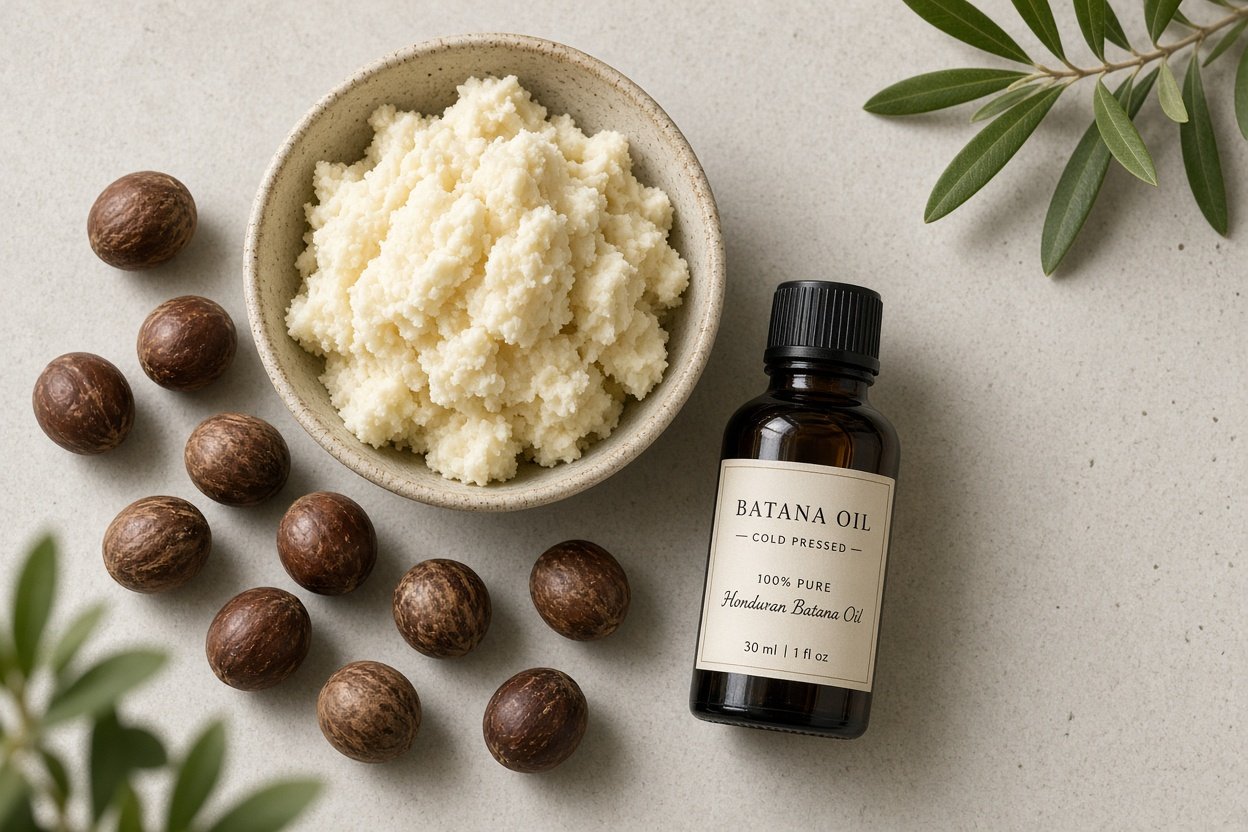
Shea butter and batana oil are two natural ingredients long used for skin and hair care, and together, shea butter and batana oil cover much of what a natural moisturising routine needs, both prized for their rich, moisturising qualities.
What Is Shea Butter?
Shea butter is made from the nuts of the shea tree, native to West Africa, where it has been used for generations in skin and hair care. It’s a thick, solid butter at room temperature that melts on contact with skin, making it a popular natural moisturiser.
What Is Batana Oil?
Batana oil comes from the fruit of the American oil palm, traditionally produced by the Miskito people of Honduras, who have used it for hair and scalp care for generations. It has a distinctive dark colour and a rich, nutty scent.

How to Use Them
Shea butter is typically applied directly to skin or hair as a moisturiser, and works well on dry patches or as a daily body cream. Batana oil is most often massaged into the scalp and hair, left in for a period before washing out, or used in small amounts as a leave-in treatment.
Why Shea Butter and Batana Oil Work Well Together
Used together, the two cover both ends of a natural hair and skin routine — shea as a rich, all-purpose moisturiser for skin and hair alike, and batana as a more targeted scalp and hair treatment. Many people use shea daily and reserve batana for a weekly treatment, rather than using either exclusively.
Shop Natural Skincare
Our African Shea Butter Cream is ready to use on skin and hair, and our Pure Organic Batana Oil is a traditional hair treatment sourced in its raw form.
Rounding Out a Natural Routine
Both pair well with other herbal oils for a fuller natural hair and skin routine. Our guide to herbal oils for hair and skin covers castor, rosemary, avocado and oregano oil, if you want to build out a more complete routine alongside shea and batana.
A Note on Scent and Colour
Unrefined shea butter is typically ivory to pale yellow with a faint nutty smell, while batana oil is notably darker, almost olive-brown, with a stronger, roasted scent — both are natural variations tied to how each is traditionally processed, not a sign of anything wrong with the product.
A Shared Tradition of Natural Care
Both ingredients have deep roots in traditional practice — shea butter across West Africa, and batana oil in Central America — and both have found a wider following as natural alternatives to synthetic skin and hair products. Read more on Wikipedia’s shea butter entry.
Combining Both Ingredients in One Routine
Some people layer both products together — a batana oil scalp treatment followed by shea butter on the ends of the hair, or shea on the body after a batana-based hair mask — treating the two as complementary rather than competing products within the same natural routine.
Choosing the Right One to Start With
If you’re focused on skin, shea butter is the more versatile starting point, given how easily it applies and how widely it can be used across the body. If your main concern is hair and scalp specifically, batana oil is the more targeted choice, particularly for anyone looking for a traditional, less processed option than typical commercial hair oils.
How Shea Butter Is Traditionally Made
Shea butter is produced by crushing and roasting shea nuts, then grinding and boiling them to separate the fat — a labour-intensive process that has traditionally been done by hand across West African communities for generations, often by women’s cooperatives whose work sustains the trade today.
How Batana Oil Is Traditionally Made
Batana oil is extracted from the fruit of the American oil palm through a similarly traditional process, cooked and pressed by hand rather than industrially refined, which is part of why it retains such a distinctive dark colour and strong, nutty scent compared to more processed hair oils.
How Long a Jar or Bottle Typically Lasts
Because both are used in relatively small amounts per application, a single jar or bottle tends to last a good while with regular use — shea butter especially, since a small scoop covers a surprising amount of skin once it’s warmed and spread. Batana oil, used mainly on the scalp and hair, similarly stretches further than its bottle size might suggest.
Texture and Application Differences
Shea butter is solid at room temperature and needs to be warmed slightly between the hands before it spreads easily, while batana oil is liquid and applies more like a typical hair oil, straight from the bottle. This textural difference is part of why they suit slightly different steps in a routine rather than being interchangeable.
Sourcing Both Ingredients Responsibly
Much of the world’s shea butter is produced by women’s cooperatives across West Africa, whose traditional harvesting and processing methods have supported local economies for generations, and choosing a genuinely traditional, minimally processed product helps support that same supply chain. Batana oil follows a similar pattern in Honduras, where Miskito communities have long produced it by hand using methods passed down within families.
What to Look for When Buying
For both, unrefined and raw versions tend to retain more of their natural scent, colour, and texture than heavily processed alternatives, which are often lighter in colour and less distinctive in smell. If a jar of shea butter looks pure white and has almost no scent, it’s likely been more heavily refined than a traditional, unrefined batch would be.
Frequently Asked Questions
Can I use shea butter on my face?
Many people do, though it’s rich, so those with oilier skin may prefer to use it on drier areas like elbows and hands instead.
How often should I use batana oil?
There’s no fixed rule — some people use it weekly as a treatment, others more often. Start with once a week and adjust based on how your hair responds.
Do these products have a strong smell?
Both have a natural, nutty scent typical of unrefined plant oils and butters, rather than the added fragrance you’d find in many commercial products.
Is it safe for sensitive skin?
As with any new skincare product, it’s worth patch testing a small area first, especially if you have sensitive skin or known allergies.
Ready to build a natural routine? Start with our African Shea Butter Cream and Pure Organic Batana Oil.
This article is for general wellness information and isn’t a substitute for medical advice.