

Blog
Herbal Sleep Tea vs Melatonin: Lavender, Valerian & What Helps

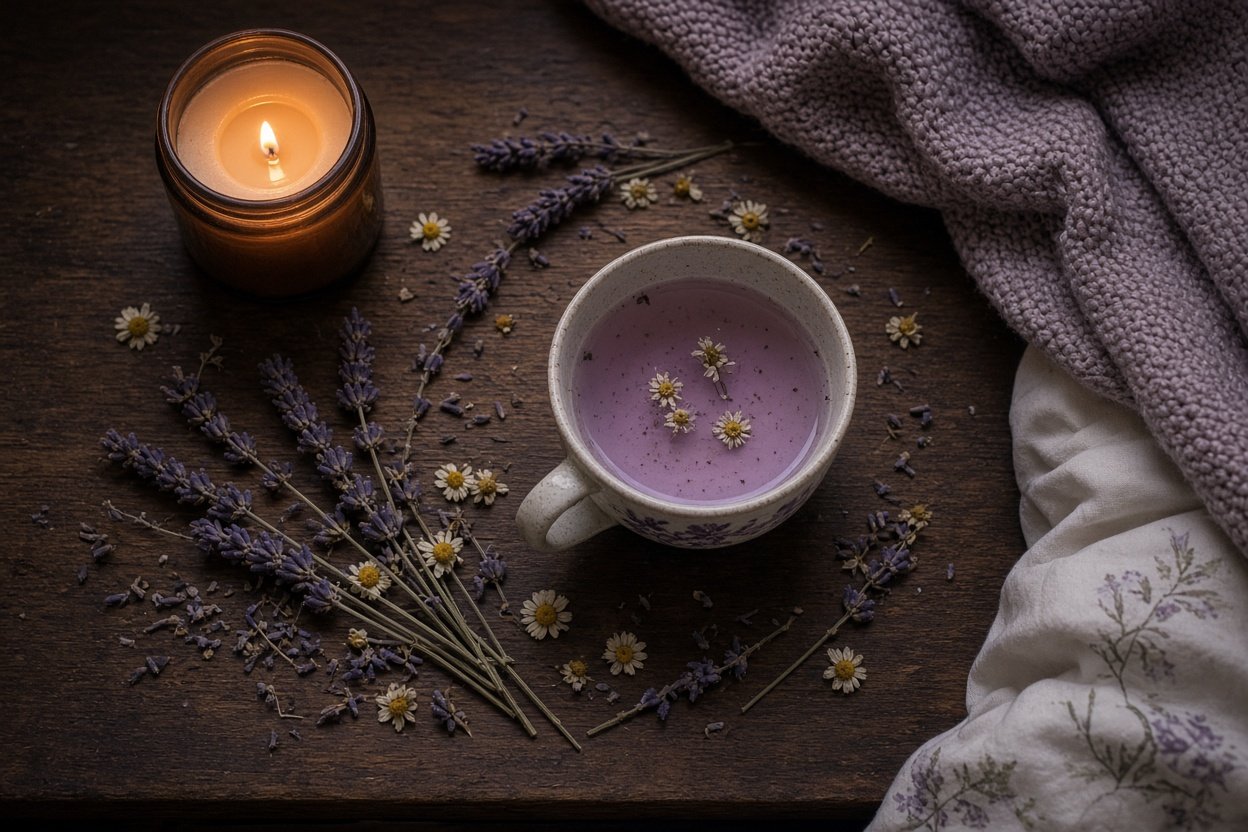
A herbal sleep tea is one of the gentlest entry points into better sleep, and one of the most searched alternatives to melatonin supplements. The two aren’t really competitors — they work through different mechanisms entirely — but it’s a comparison worth making properly rather than assuming one is just a weaker version of the other.
What’s in a Herbal Sleep Tea
Our Sleep Well Bedtime Tea combines lavender, chamomile, lemon balm, valerian, and passion flower — five herbs with genuinely different, complementary roles rather than five versions of the same thing stacked together.

Sleep Tea vs Melatonin: The Actual Difference
Melatonin is a hormone your body produces naturally to regulate its sleep-wake cycle, and melatonin supplements work by directly topping up that hormone — useful for things like jet lag or a shifted schedule, where the body’s internal clock itself is the problem. Herbal sleep teas work differently: valerian and passion flower are thought to interact gently with GABA, the brain’s primary calming neurotransmitter, while lavender and chamomile work more through relaxation and the ritual of a warm drink itself.
A systematic review and meta-analysis published in the American Journal of Medicine found valerian was associated with improved subjective sleep quality, without the morning grogginess some people report from melatonin or sleep medication. That makes herbal tea a reasonable first option for general difficulty winding down, while melatonin tends to suit circadian-rhythm-specific problems better.
Building an Actual Wind-Down Routine
The tea itself matters less than when and how it’s used. Brew a cup around 30–45 minutes before you actually want to be asleep, not right as you’re getting into bed — that gives the valerian and passion flower time to take effect, and turns the brewing itself into part of a wind-down ritual rather than a last-minute add-on. Steep for up to ten minutes to draw out the full effect of the herbs, and pair it with the basics that make the biggest difference anyway: dimmer lights, no screens, and a consistent bedtime.

Who Should Be Cautious
Valerian in particular can interact with sedatives, alcohol, and some prescription medications, so it’s worth checking with a pharmacist if you’re already taking anything for sleep or anxiety. It’s also not recommended during pregnancy without medical guidance. If poor sleep has been a persistent, ongoing problem rather than an occasional restless night, that’s worth raising with a doctor — a tea is a supporting habit, not a treatment for a diagnosed sleep disorder.
When to Reach for Something Else
If you’re dealing with jet lag or a shifted work schedule specifically, melatonin is genuinely the better-suited tool, since it targets the actual mechanism at play. If it’s more general evening restlessness or difficulty switching off, the herbal route — and the ritual around it — tends to be the gentler, more sustainable long-term habit. Looking for something earlier in the day instead? Our guide on the best time to drink herbal tea covers how to build a full-day routine around it.
Ready to build a proper wind-down routine? Pick up the Sleep Well Bedtime Tea and make it part of tonight.
What About Naps or Daytime Use
This blend is built for evening use, not for squeezing in during a busy afternoon slump — valerian and passion flower are calming enough that most people would rather not feel that drowsy at 2pm. If you need something lighter during the day, a plain chamomile or mint tea is a better fit, saving this one specifically for winding down at night.
This article is for general wellness information and isn’t a substitute for medical advice. Speak to your doctor or pharmacist before use if you take sedatives or sleep medication, or if you are pregnant, nursing, or managing a medical condition.