

Blog
Detox Tea 101: What Artichoke and Nettle Actually Do (and Don’t)

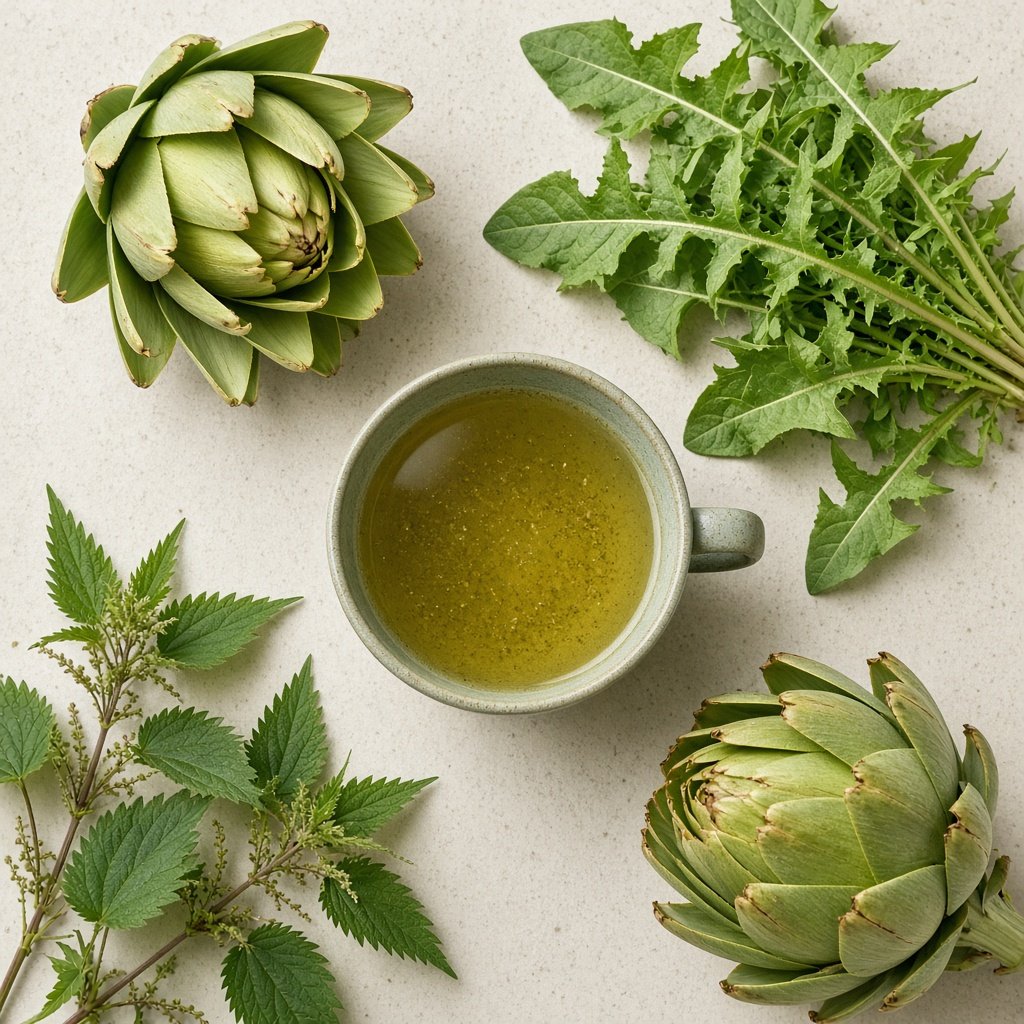
“Detox tea” is one of the most overused phrases in wellness marketing, which is exactly why it’s worth a straight answer: what does a herbal detox tea actually do, and what’s just a label? Your liver and kidneys already detoxify your body around the clock without help from any tea — but that doesn’t mean every ingredient in a detox blend is meaningless. It means the honest claim is narrower than “flush out toxins.”
What’s Actually in a Detox Tea
Our Super Detox Tea is built around agrimony, artichoke leaves, nettle leaves, blackcurrant leaves, calendula, cumin fruit, wild pansy, and strawberry leaves — a genuinely different formula from the senna-based “detox” teas that dominate the category and mostly just work as a laxative.

What the Research Says About Herbal Detox Tea
- Artichoke leaf has the most solid research behind it. A pilot randomized controlled trial found artichoke leaf extract improved liver enzyme markers in patients with non-alcoholic fatty liver disease over two months of use.
- Nettle leaf is traditionally used as a mild diuretic and is being studied for its role in blood sugar regulation, though the evidence here is earlier-stage than artichoke’s.
- Cumin fruit is more commonly associated with digestive comfort than detoxification specifically — genuinely useful, just a different claim than “toxin removal.”
- Calendula and agrimony both carry antioxidant properties, which support general cellular health rather than any specific organ-cleansing action.
The Honest Version of What “Detox” Means Here
Your body’s actual detox organs — the liver and kidneys — work continuously and don’t need a tea to switch on. What a blend like this realistically offers is digestive support (easing bloating and irregular digestion), a nutrient and antioxidant boost, and a caffeine-free habit that often replaces a less healthy one — a cup of this instead of a sugary drink adds up over weeks, even without anything dramatic happening internally. That’s a genuinely useful role. It’s just a different, more modest claim than what “detox” implies on the label.

How to Drink It
Most people drink one to two cups a day, ideally between meals rather than with food, since that’s when the digestive-support herbs are doing their most useful work. Unlike senna-based “detox” teas, this one isn’t a laxative and isn’t designed to be used that way — if you’re looking for that specific effect, that’s a different product and a different conversation with a pharmacist about whether it’s appropriate at all.
Who Should Skip It
If you’re pregnant, nursing, or managing a diagnosed liver or kidney condition, speak to your doctor before adding any new herbal blend, including this one — “natural” doesn’t automatically mean risk-free for every situation, and specific conditions can change how these herbs interact with your body or medication.
Looking for the slimming-focused side of the same “detox” category, minus the senna? Our guide to slimming tea covers the weight-management-focused blend from the same lineup.
Ready to try it? Pick up the Super Detox Tea and see how it fits your routine.
Building It Into a Weekly Habit
Most people get more out of this blend as a steady weekday habit than an occasional treat — a cup with breakfast, or one mid-afternoon instead of a second coffee, adds up over a month in a way a single cup here and there never will. If you’re new to it, start with once a day for the first week and see how your digestion responds before adding a second cup.
This article is for general wellness information and isn’t a substitute for medical advice. Speak to your doctor before use if you are pregnant, nursing, or managing a liver, kidney, or other medical condition.