
Blog
Raw Honey Guide: Acacia, Wildflower and Forest Honey Compared

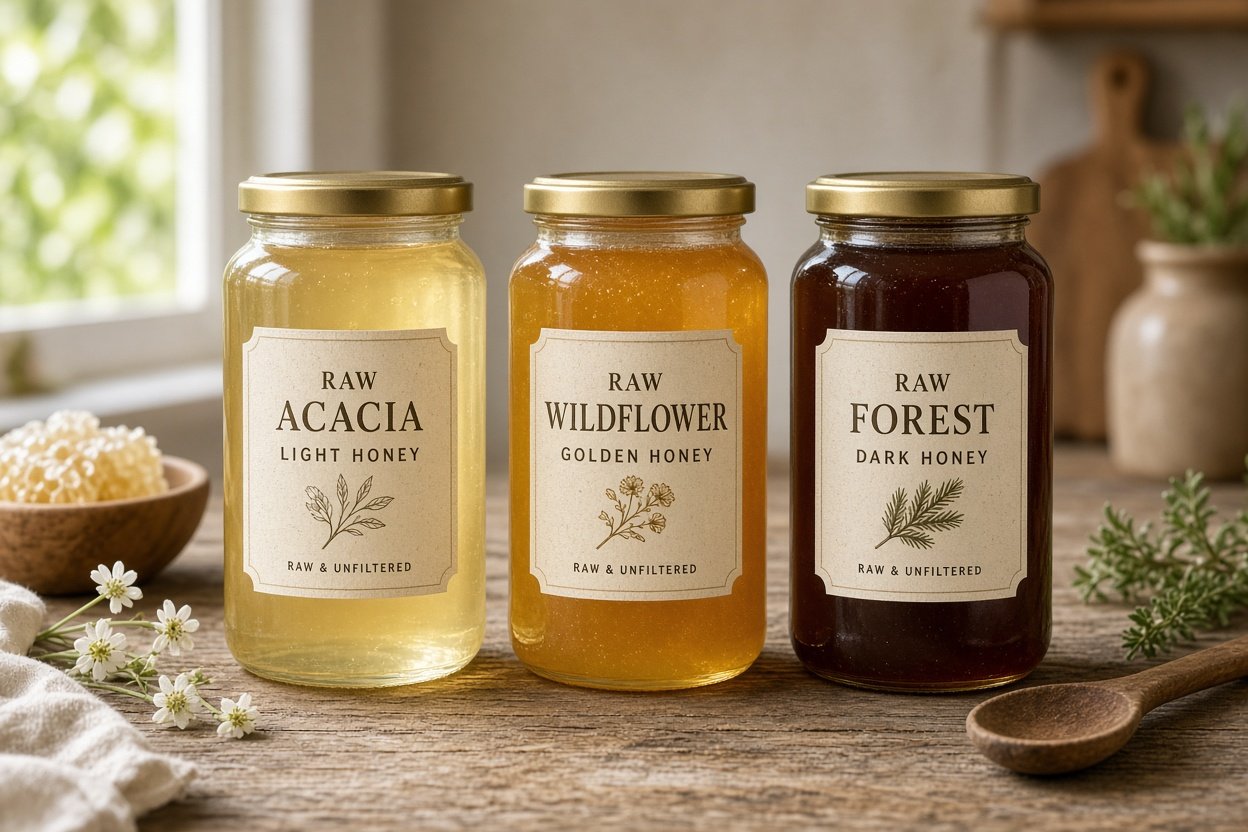
Raw honey isn’t one thing. Its colour, texture and flavour all change depending on which flowers the bees fed on, and knowing the difference makes it easier to pick the right jar for what you want to use it for. Here’s how our three raw honeys compare.
Acacia honey
Acacia honey is one of the lightest and clearest honeys, with a mild, delicate flavour and very little of the “honey” aftertaste that stronger varieties have. It’s slow to crystallise, so it tends to stay runny for longer than most other honeys. This makes it a good everyday honey for tea or toast, where you don’t want the honey to compete with other flavours. Try our Pure Raw Acacia Honey.
Wildflower honey
Wildflower honey comes from bees foraging across a wide mix of flowers rather than one single crop, so its flavour and colour vary a little from batch to batch. It generally has a fuller, more rounded taste than acacia honey, with a golden colour. It’s a good all-purpose choice if you want a honey with a bit more character. Try our Organic Raw Wildflower Honey.
Wild African forest honey
Forest honey tends to be darker and more intensely flavoured, with deeper, sometimes slightly smoky or molasses-like notes. It stands up well in cooking and baking, where a milder honey might get lost. Try our Raw Wild African Forest Honey.
How to choose
- For tea and coffee, where you want the honey to be mild: acacia.
- For toast, yoghurt and everyday use: wildflower.
- For baking, marinades and anywhere you want a stronger honey flavour to come through: forest honey.
Why honey varies so much
Honey’s flavour, colour and how quickly it crystallises all depend largely on which flowers the bees visited, a process called floral source. You can read more about how this works on the Wikipedia entry on honey.
Try them all
All three are raw and unpasteurised. If you want to compare them side by side, our full range is in the honey collection.