
Blog
Senna Tea: A Traditional Gentle Herbal Tea Explained

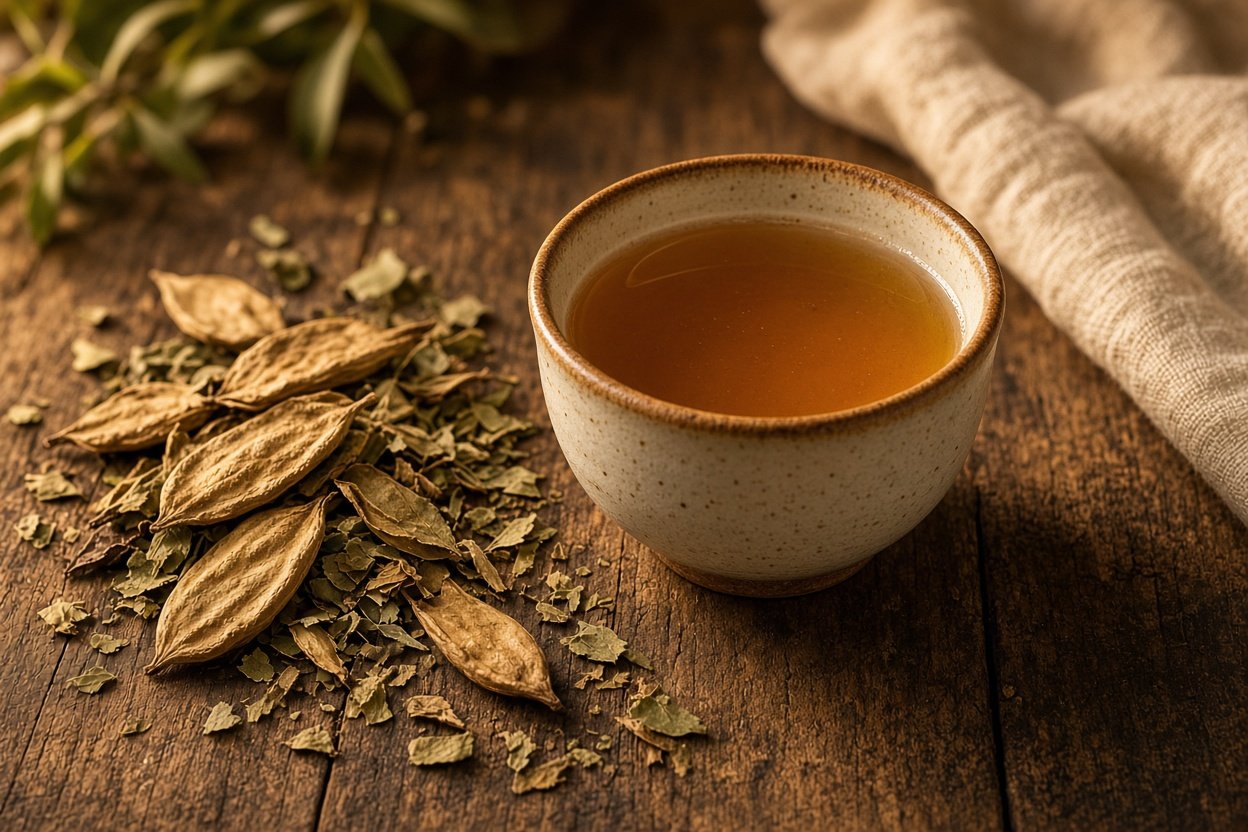
Senna tea is a herbal infusion made from the dried leaves or pods of the senna plant, and the senna tea benefits it’s best known for have made it one of the more recognisable herbal teas by name, even to people who haven’t tried it.
What Is Senna?
Senna (Senna alexandrina) is a flowering plant whose leaves and pods have a long history of traditional use, most often prepared as an occasional evening tea rather than an everyday drink. It’s sold either as loose dried leaf or as whole pods.
How to Brew It
- Use a small amount — around one teaspoon of leaf, or two to three pods, per cup.
- Pour freshly boiled water over it and cover.
- Steep for 5 to 10 minutes.
- Strain and drink, traditionally in the evening.

Leaf or Pods: Which to Choose
Our Strong Senna Tea is a loose leaf blend, ready to steep straight into hot water. Our Premium Senna Pods are the whole dried pods, which some people prefer for a milder, more traditional preparation, simmered gently rather than simply steeped.
The Senna Tea Benefits Worth Understanding
Senna’s best-known traditional use is as a gentle, occasional aid for regularity, which is why it’s typically taken in the evening rather than built into an all-day routine. It’s a stronger herbal tea than most of what’s covered on this site, which is exactly why it’s used sparingly rather than as a daily cup.
A Little Goes a Long Way
Senna is typically used occasionally and in small amounts rather than as a daily tea, and many people start with a shorter steep or fewer pods the first time they try it, adjusting to taste and preference from there.
A Different Kind of Herbal Tea
Unlike a gentle digestion tea such as ginger or mint, which is often reached for daily, senna belongs to a category of stronger herbal teas meant for occasional, specific use. Our guide to cerasee tea covers another tea in this stronger, more occasional category, if you’re comparing traditional options.
Origins
Senna has been used across parts of Africa and the Middle East for generations, and today it’s grown and traded more widely. You can read more on Wikipedia’s senna entry.
Why Evening Is the Traditional Timing
Senna is traditionally taken in the evening because of how long it typically takes to have its effect overnight, meaning the timing is a practical consideration as much as a cultural one. Taking it earlier in the day is less common specifically for this reason.
Not a Daily Habit
Unlike most of the teas covered elsewhere on this site, senna is one to specifically avoid drinking every day. Repeated daily use of a stronger herbal tea like this is generally discouraged in traditional use, which typically reserves it for occasional, specific moments rather than a routine habit.
Adjusting the Dose
If this is your first time trying senna, it’s worth starting with less than the standard measure — half the usual amount of leaf, or a single pod rather than two or three — to see how your body responds before working up to a fuller dose on a future occasion.
Pods vs Leaf: A Closer Look
Pods are generally considered a gentler, more traditional preparation than the loose leaf, in part because they’re often simmered rather than simply steeped, drawing out their effect more slowly. The loose leaf tea is quicker to prepare and steeps more like a standard herbal tea, which is why it’s the more convenient option for most people.
What to Expect
Because senna’s effect is delayed rather than immediate, it’s worth planning around that timing rather than expecting anything right after drinking it. This is part of why it’s traditionally taken before bed rather than at any other point in the day.
Senna and Occasional Use in Context
Because senna is meant for occasional rather than regular use, it’s worth thinking of it less as a tea to build into a daily habit and more as something to keep on hand for the specific, infrequent moments it’s traditionally used for. This is a meaningfully different approach than most of the other herbal teas covered on this site, where daily use is generally the point rather than the exception.
Who Should Avoid It
Senna isn’t suitable for regular, long-term use, and shouldn’t be relied on as a substitute for addressing the underlying cause of ongoing digestive discomfort. If you find yourself needing it frequently, that’s a signal to speak with a doctor rather than continuing to increase how often you use it.
How Senna Differs From Everyday Herbal Teas
Most herbal teas covered on this site — mint, ginger, camomile — are designed to be part of a daily routine, drunk simply because someone enjoys the flavour or the ritual of a cup. Senna doesn’t really fit that mould. It’s a tea people reach for with a specific, occasional purpose in mind, taken at a specific time of day for a specific reason, which puts it in a different category from a tea you’d casually sip while reading or relaxing.
Traditional Preparation Methods
Beyond simply steeping the pods or leaf in hot water, some traditional preparations call for a longer, gentler simmer, which draws out senna’s effect more slowly than a quick steep. Households that prefer the pods over the loose leaf often favour this simmering method specifically, treating it as a gentler, more measured way to prepare the tea compared to a fast steep-and-strain approach.
Senna’s Reputation Around the World
Senna has a long history of traditional use stretching from parts of Africa and the Middle East to wider international trade today, and it remains one of the more widely recognised herbal teas by name, even among people who’ve never tried a cup. That recognition is partly why it’s often the first herbal tea people think of when the topic of gentle, traditional evening teas comes up, despite there being many gentler options better suited to daily use.
Frequently Asked Questions
Is senna tea caffeine-free?
Yes, it’s naturally caffeine-free.
How often can I drink it?
Senna is traditionally used occasionally rather than every day. If you’re unsure how it might affect you, start with a small amount.
What’s the difference between the leaf tea and the pods?
Both come from the same plant. The leaf is quicker to steep as a straightforward tea, while pods are often simmered for a gentler, more traditional preparation.
Should I speak to a doctor first?
Yes — senna is a stronger herbal tea than most, so if you’re pregnant, breastfeeding, on medication or have a health condition, check with a healthcare professional before trying it.
Curious to try it? Explore our Strong Senna Tea and start with a small, occasional cup.
This article is for general wellness information and isn’t a substitute for medical advice.