

Blog
Cerasee Tea: The Caribbean Bitter Melon Tradition

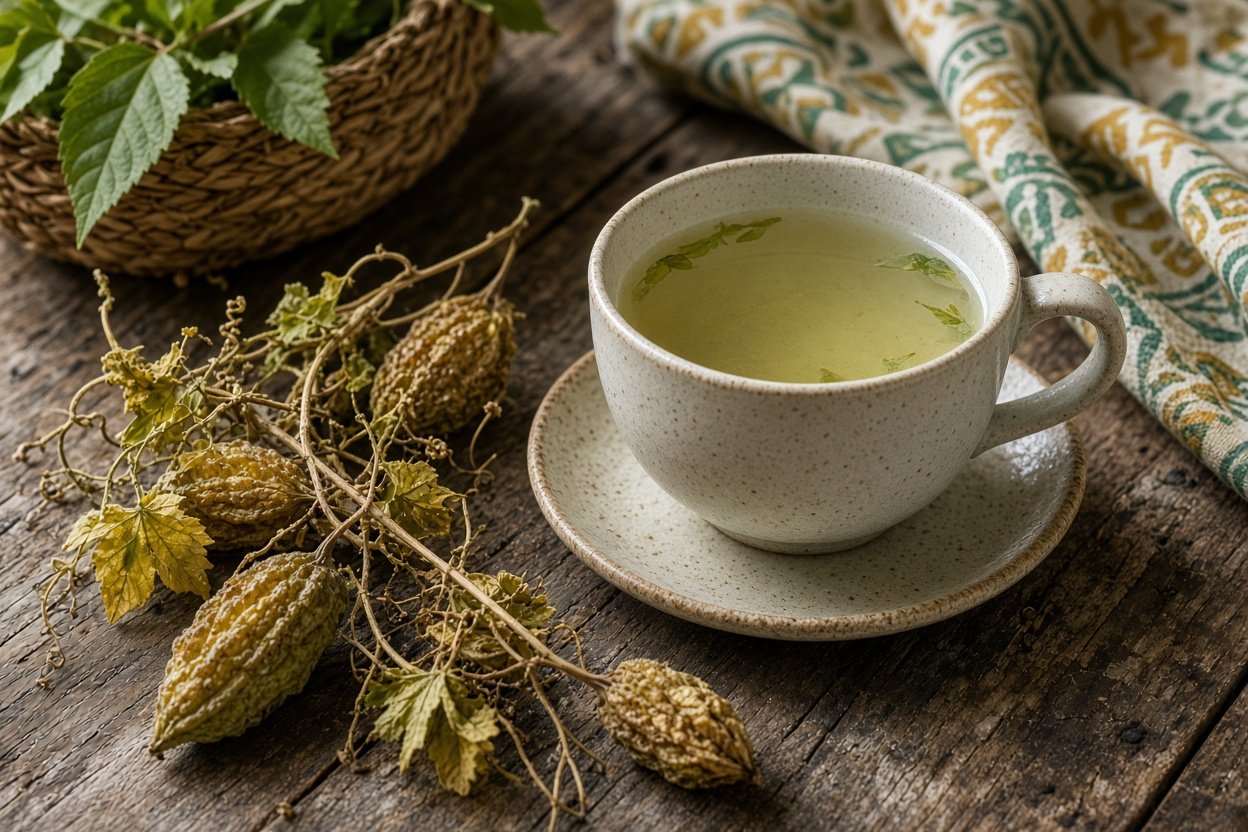
Cerasee tea (also spelled cerassee or cerasee) is a bitter herbal tea made from the dried vine of the bitter melon plant, and the cerasee tea benefits associated with it have made it a staple of Caribbean and Jamaican households for generations.
What Is Cerasee?
Cerasee comes from Momordica charantia, commonly known as bitter melon or bitter gourd, a climbing vine that also produces the bitter melon vegetable used in cooking across Asia and the Caribbean. For tea, it’s the dried vine and leaves that are used rather than the fruit itself.
How to Brew Cerasee Tea
- Use a small handful of dried cerasee vine per cup or small pot.
- Add freshly boiled water and cover.
- Steep for 5 to 10 minutes — longer steeping brings out more bitterness.
- Strain into a cup. Some households simmer it gently on the stove for a stronger brew instead of steeping.

What It Tastes Like
True to its name, cerasee tea is bitter — noticeably more so than most herbal teas. It’s traditionally drunk without milk, and while some add a little honey or lime, many prefer it plain, the way it’s been made in Caribbean kitchens for generations.
The Cerasee Tea Benefits Behind the Tradition
In Caribbean and Jamaican households, cerasee has traditionally been reached for as a general tonic, often as part of a seasonal or occasional routine rather than an everyday drink. Its bitterness is closely tied to the same plant family as bitter melon, a vegetable also valued in several culinary and traditional wellness traditions for its distinctive properties.
Shop Cerasee Tea
Our Cerasee Bitter Melon Tea is a traditional loose leaf blend for brewing at home.
Part of a Wider Bitter Tea Tradition
Cerasee shares its bitter reputation with other traditional herbal teas from different regions, including senna and neem. If you’re exploring this style of tea more broadly, our guide to senna tea covers another traditional option worth knowing, particularly if bitterness alone isn’t a dealbreaker for you.
A Caribbean Household Staple
Cerasee has long been part of Jamaican and wider Caribbean traditional practice, often brewed at home rather than bought ready-made. You can read more about the bitter melon plant on Wikipedia’s bitter melon entry.
Simmering vs Steeping
Many Caribbean households prefer simmering cerasee gently on the stove for several minutes rather than simply steeping it in a cup, arguing it draws out a fuller, more rounded bitterness than a quick steep alone. Both methods are traditional; simmering is simply the stronger, more concentrated version of the same tea.
A Tea Often Passed Down
Many people’s first experience with cerasee comes from a parent or grandparent’s kitchen rather than a shop shelf, which is part of why it carries such strong cultural weight in Caribbean households beyond whatever it’s believed to do. Learning to brew it at home is, for many, as much about tradition as it is about the tea itself.
Adjusting the Bitterness to Your Taste
If a full-strength cerasee tea feels like too much at first, using a smaller handful of vine or steeping for a shorter time are both reasonable ways to ease into it, working up to the traditional strength as your palate adjusts over repeated cups.
Serving It the Traditional Way
Cerasee is typically served hot, in a small cup rather than a large mug, reflecting its role as a tonic-style drink rather than an everyday beverage sipped throughout the day. Treating it this way — a smaller, more deliberate cup — tends to make the bitterness easier to manage than trying to drink a full-sized mug at once.
Where to Find Cerasee
Fresh cerasee vine can be harder to find outside the Caribbean and parts of West Africa, which is why a dried, shelf-stable version is the most practical way for most people to try it at home, without needing access to the fresh plant itself.
Cerasee and Its Reputation for Bitterness
Ask anyone who grew up with cerasee tea and they’ll likely mention the bitterness before anything else — it’s often the defining memory people have of their first cup, usually served by a parent or grandparent insisting it was “good for you.” That reputation has followed the tea well beyond the Caribbean, and it’s part of why cerasee tends to appeal most to people who already enjoy strongly bitter foods and drinks, or who are specifically curious about trying an authentic traditional preparation rather than something milder.
Who Should Be Cautious
Cerasee’s intensity means it isn’t a tea to drink casually in large amounts, and its traditional use as an occasional tonic reflects that. If you’re pregnant, nursing, managing diabetes, or taking any regular medication, it’s especially worth checking with a healthcare professional first, given bitter melon’s traditional association with blood sugar.
Cerasee’s Role in Seasonal Traditions
In many Caribbean households, cerasee tea is associated less with a daily routine and more with specific moments — after a heavy holiday meal, at the start of a new year, or during a seasonal “cleanse” period that some families observe. This occasional, purposeful use is part of what distinguishes cerasee from an everyday herbal tea like mint or ginger, which people tend to drink simply because they enjoy it, at any time.
Bitter Melon in the Kitchen vs the Teacup
The same bitter melon plant that gives cerasee tea its name also appears as a vegetable in dishes across the Caribbean, West Africa, and Asia, typically stir-fried, stuffed, or added to curries. Cooking mellows bitter melon’s intensity somewhat compared to the dried vine used for tea, which is one reason people who find the vegetable manageable are sometimes still surprised by how much stronger the tea tastes in comparison.
Cerasee Across Generations
Like many traditional bitter teas, cerasee is often introduced to children in small, diluted amounts by parents or grandparents who grew up drinking it themselves, making it as much a piece of inherited family practice as a drink chosen for its taste. That generational passing-down is a big part of why cerasee remains popular in Caribbean households today, even among younger generations who might not otherwise choose a bitter tea on flavour alone.
Frequently Asked Questions
Is cerasee tea caffeine-free?
Yes, it’s naturally caffeine-free.
Why is it so bitter?
The bitterness comes from natural compounds in the bitter melon vine, the same plant family behind the bitter melon vegetable. It’s the tea’s defining characteristic rather than a sign of anything gone wrong.
Can I add anything to soften the taste?
A little honey or a squeeze of lime is common if the bitterness is too much on its own, though many drink it plain.
Should I check with a doctor before trying it?
If you’re pregnant, breastfeeding, on medication or managing a health condition, it’s worth checking with a healthcare professional first, as with any strong herbal tea.
Ready to try a genuine Caribbean tradition? Pick up our Cerasee Bitter Melon Tea and brew it the traditional way.
This article is for general wellness information and isn’t a substitute for medical advice.