
Blog
Natural Blood Pressure Support Tea: Hibiscus, Luobuma & What Helps

A blood pressure support tea is a genuinely old idea wearing a new search trend. Traditional Chinese and West African medicine have used herbs like hibiscus and luobuma for circulation and heart health for centuries, long before “natural blood pressure support” became something people typed into Google at 11pm after a concerning reading at the pharmacy.
This is one of the more evidence-backed corners of herbal tea, but it’s also one where the stakes of getting the messaging wrong are higher than usual — so let’s be precise about what the research actually shows.
What’s in a Blood Pressure Support Tea
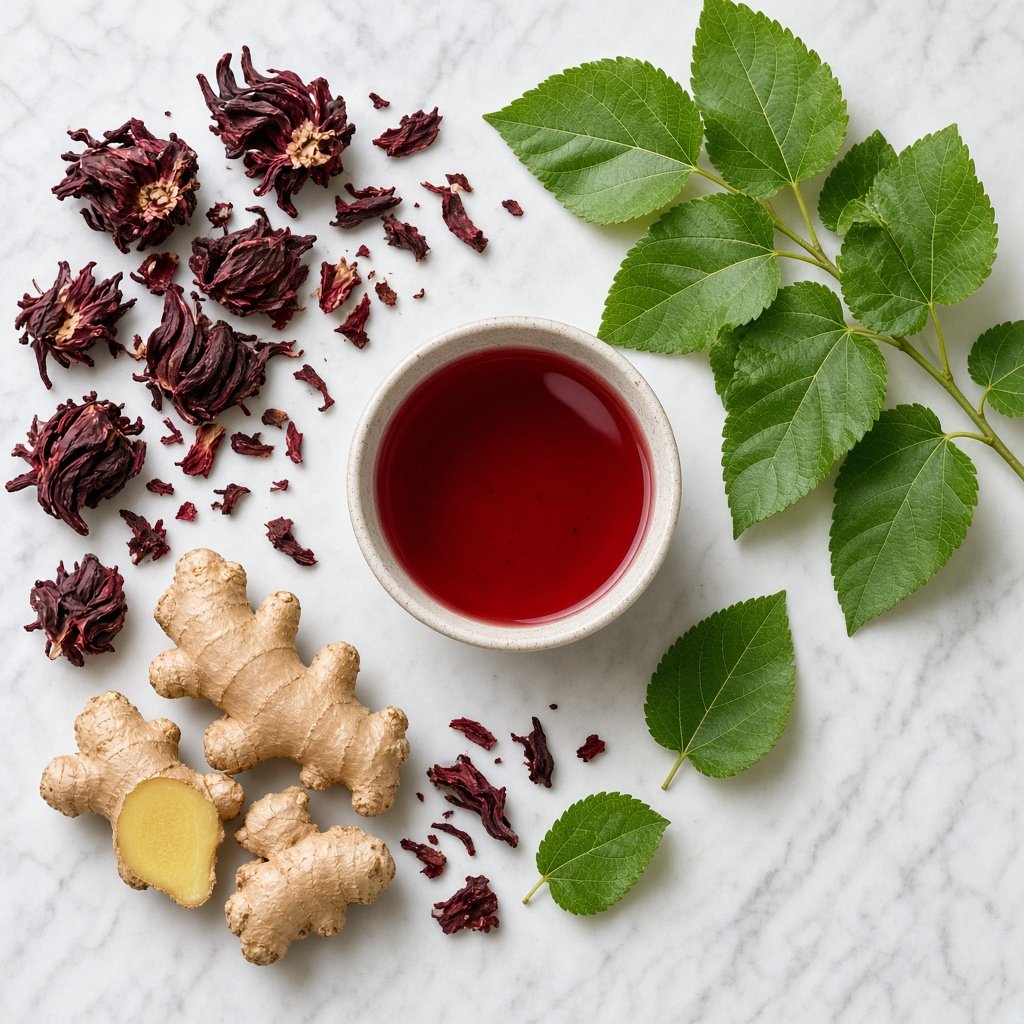
Our Pressure Free Tea is built around luobuma (a wild herb from Traditional Chinese Medicine, also called dogbane), hibiscus, mulberry leaves, gynostemma, ginger root, avocado leaves, and arjuna bark — a wider blend than most single-herb “hibiscus tea” products on the market.

What the Research Actually Shows
- Hibiscus has the strongest evidence base of the group. A study published in the Journal of Advanced Pharmaceutical Technology & Research found that hibiscus sabdariffa effectively lowered blood pressure in patients with stage one hypertension.
- Luobuma (Apocynum venetum) has a long history in Traditional Chinese Medicine for antihypertensive use, with early pharmacological research pointing to antioxidant and nitric-oxide-related mechanisms.
- Gynostemma is more commonly studied for blood sugar and insulin sensitivity, which matters here because blood pressure and blood sugar are closely linked — supporting one often supports the other.
- Arjuna bark is a long-standing Ayurvedic heart tonic herb, traditionally used alongside — not instead of — conventional cardiac care.
An Important Caveat
Stage one hypertension, the kind studied in the hibiscus research above, is a specific, mild clinical category — not a stand-in for higher blood pressure generally, and not a substitute for whatever your doctor has actually diagnosed. If you’ve been told you have hypertension, especially anything beyond a mild, early-stage reading, this tea is something to discuss with your doctor as a possible addition to your routine, not a replacement for medication you’ve already been prescribed. Stopping or adjusting blood pressure medication without medical guidance can be genuinely dangerous, and no tea is worth that risk.

How to Drink It
This blend is caffeine-free and versatile enough to serve hot or as an iced tea, which makes it easier to build into a daily habit than a blend you can only enjoy one way. Most people drink it once or twice a day, and because it’s naturally tart from the hibiscus, it holds up well over ice with a slice of lemon if the hot version isn’t for you in warmer months.
It pairs naturally with the same everyday habits that support healthy blood pressure more broadly: reducing added salt, staying active, and managing stress — a tea is a supporting habit, not a substitute for those fundamentals.
Where This Fits Alongside Other Wellness Teas
Blood pressure and blood sugar are closely connected, so if you’re also looking at glucose-focused blends, our guide to natural blood sugar support tea covers the gymnema and bitter melon side of the same broader cardiometabolic picture.
Consistency Matters More Than the Cup
Like most of the teas in this line, the biggest factor in whether people notice a difference isn’t the blend itself — it’s whether they actually keep drinking it. A cup here and there before a doctor’s appointment won’t tell you much; a few consistent weeks, alongside the everyday basics, will. Treat it as a habit you’re building, not a one-off fix you reach for on a bad reading.
Ready to try it? Pick up the Pressure Free Tea and build it into a routine your doctor’s aware of.
This article is for general wellness information and isn’t a substitute for medical advice. Do not stop or adjust blood pressure medication without speaking to your doctor first, and consult them before adding this tea if you are pregnant, nursing, or managing a cardiovascular condition.