
Blog
Natural Blood Sugar Support: What Herbal Tea Can (and Can’t) Do

Why “Natural Blood Sugar Support” Is Suddenly Everywhere
A blood sugar support tea is one of the fastest-growing search terms in herbal wellness right now. Interest has climbed sharply over the past couple of years, largely on the back of the conversation around GLP-1 medications like Ozempic and Wegovy.
A lot of that search traffic isn’t people looking for a prescription — it’s people looking for something gentler to add to their daily routine: a tea, a herb, a habit they can build without a needle or a script.
It’s worth saying clearly upfront: herbal tea does not work the same way GLP-1 drugs do, and it isn’t a substitute for medication or medical advice. What it can offer is a long tradition of herbal use around glucose balance, paired with a genuinely enjoyable daily ritual. That’s the honest pitch, and it’s a better one than pretending otherwise.
What’s Actually in a Blood Sugar Support Tea
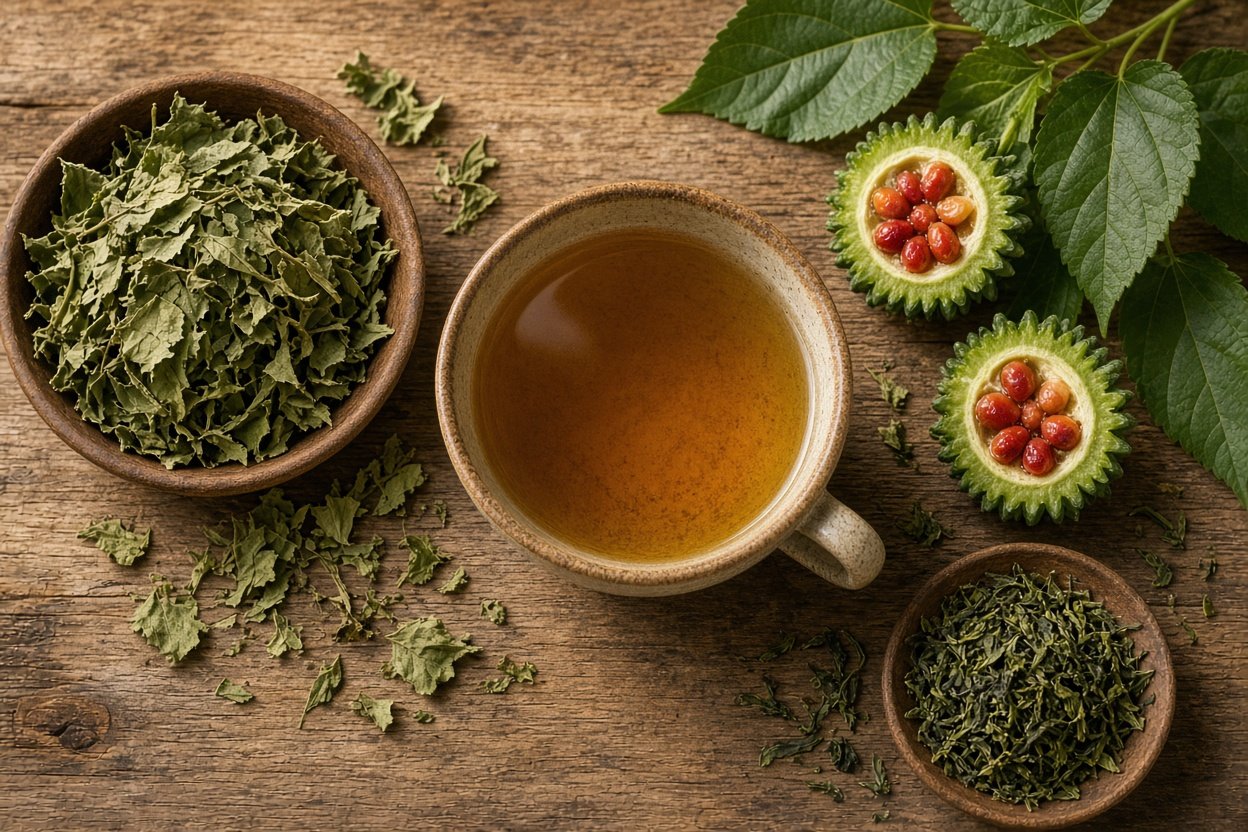
Not all “diabetes-friendly” or “sugar support” teas are built the same. Our Super Gluco Blocker Tea is blended around six specific botanicals, each with its own history in Ayurvedic and folk medicine: gymnema sylvestre (gurmar), bitter melon (cerasee), green tea, giloy, jamun (Indian blackberry), and mulberry leaf. None of these are novel discoveries — they’ve been used in South Asian and Caribbean traditional medicine for generations, well before “GLP-1 alternative” became a search term. That long history of everyday use is part of why these particular herbs keep showing up together across different blends and brands, not just ours.

The Herbs Behind the Trend
- Gymnema sylvestre — sometimes called “sugar destroyer” in Hindi. It’s traditionally chewed or brewed specifically for its effect on the taste buds: many people report that sweet foods taste noticeably less appealing for a while after taking it. A small peer-reviewed study published in Nutrients found consuming gymnema reduced participants’ desire for high-sugar sweet foods compared to a placebo.
- Bitter melon (cerasee) — a fibre-rich fruit long used in Caribbean and Asian herbal medicine, usually taken as a bitter tonic, tea, or cooked dish. It has one of the longest folk-medicine track records of any ingredient on this list.
- Green tea — brings antioxidants (catechins) and a metabolism-supporting reputation, plus a lighter, more drinkable base that keeps the blend from tasting purely medicinal.
- Giloy (Tinospora cordifolia) — a staple of Ayurvedic medicine, traditionally used as a general tonic herb rather than a single-purpose remedy, often included for overall wellness support alongside its role here.
- Jamun — the seed and fruit have a long folk history in South Asian diabetes management practices, often ground into powder or steeped much as it is in this blend.
- Mulberry leaf — used traditionally across several herbal medicine systems, often alongside the other botanicals above rather than on its own, which is roughly how it’s used here too.
Tea or Capsules: Which Format Fits Your Day
Some people want the ritual — a warm cup first thing in the morning and again before bed is genuinely easier to stick to than most supplement routines, simply because it feels like a habit rather than a chore. Others want convenience they can carry in a bag or take with lunch without brewing anything.
If that’s you, our GlucoBlocker Capsules carry a similar herbal profile — gymnema, bitter melon, neem, fenugreek, turmeric, cinnamon and more — in a measured, no-brew format. Neither is “better” than the other; it genuinely comes down to which one you’ll actually use every day, since consistency matters more than the format. Some people even use both — capsules on busy weekdays, tea on slower mornings — rather than treating it as an either/or choice.
How to Build It Into a Daily Routine
The traditional approach is simple: one cup first thing in the morning, and one last thing at night, steeped for around 5–8 minutes in freshly boiled water. Because this blend is more concentrated than an everyday herbal tea, it’s worth sticking to a sensible daily amount rather than treating it like a normal cup of tea you can drink all day — moderation is part of using any herbal blend responsibly.
A lot of people pair it with meals rather than drinking it separately, since that’s when blood sugar swings are most noticeable. It won’t taste like your usual green or mint tea — the bitter melon and gymnema give it a distinctly earthy, slightly bitter character, which is a fair trade-off for the ingredient list. If the bitterness is too much at first, a slice of lemon can round out the flavour without diluting the blend’s intended use.
Why Sourcing Matters Here More Than Usual
Blends like this are a good example of why sourcing matters more than it does for, say, a simple mint tea. Gymnema and bitter melon in particular vary a lot in potency depending on where and how they’re grown, so a cheap, unclear blend can end up mostly filler with a token amount of the active herbs. Ours is caffeine-free, made without preservatives, artificial flavouring, or GMOs, and blended specifically around the six herbs above rather than padded out with generic “herbal tea” filler leaves. If you’re comparing blends, it’s worth checking whether a product actually lists its herb ratios or just leans on the word “detox” and hopes nobody asks.
A Realistic Timeline
One of the most common questions about any herbal routine is how quickly it “works,” and the honest answer is: differently for everyone, and usually not overnight. Traditional use of these herbs is built around consistency over weeks, not a single cup before a big meal. Think of it the same way you’d think about cutting back on sugary drinks or adding a daily walk — a small, repeatable habit rather than a quick fix. If you’re tracking anything related to your health alongside it, keep that tracking consistent too, since that’s the only way to actually notice a pattern over time.
Common Questions
Can I drink this if I’m not diabetic? Yes — plenty of people drink it simply to cut back on sugar cravings or as part of a general wellness routine, not only for diagnosed blood sugar concerns.
Can I take it alongside metformin or other medication? Some of these herbs can interact with blood-sugar-lowering medication, so this is exactly the kind of thing to run past your doctor or pharmacist first, rather than guessing.
Does it taste like a normal tea? No — expect something closer to a bitter, earthy tonic than a fruity or floral cup. It’s a trade-off most people make peace with once they know what to expect going in.
How much should I drink per day? Traditional use sticks to two cups a day — morning and night — rather than sipping it throughout the day like a regular herbal tea.
What Herbal Tea Can’t Do
This is the part most tea sites skip, and it’s the part that matters most. Herbal tea is not a treatment for diabetes, it will not replace prescribed medication, and it should never be stopped or started as a substitute for medical advice. If you’re managing diagnosed diabetes or prediabetes, or you’re on any medication that affects blood sugar, talk to your doctor before adding a new herbal blend to your routine. What tea like this realistically offers is a traditional, enjoyable addition to an already sensible routine, not a replacement for one.
If you want to read more about what actually separates a “super tea” from an ordinary one — the ingredient sourcing, the concentration, the traditional backing — our guide on what makes a tea “super” breaks it down in more depth.
Ready to try a blood sugar support tea for yourself? Pick up the Super Gluco Blocker Tea for the daily ritual, or the GlucoBlocker Capsules if you’d rather skip the brewing.
This article is for general wellness information and isn’t a substitute for medical advice. Speak to your doctor before using herbal supplements if you are pregnant, nursing, or managing a medical condition.