
Blog
Cold and Flu Tea: Elderflower, Rosehip & What Actually Helps

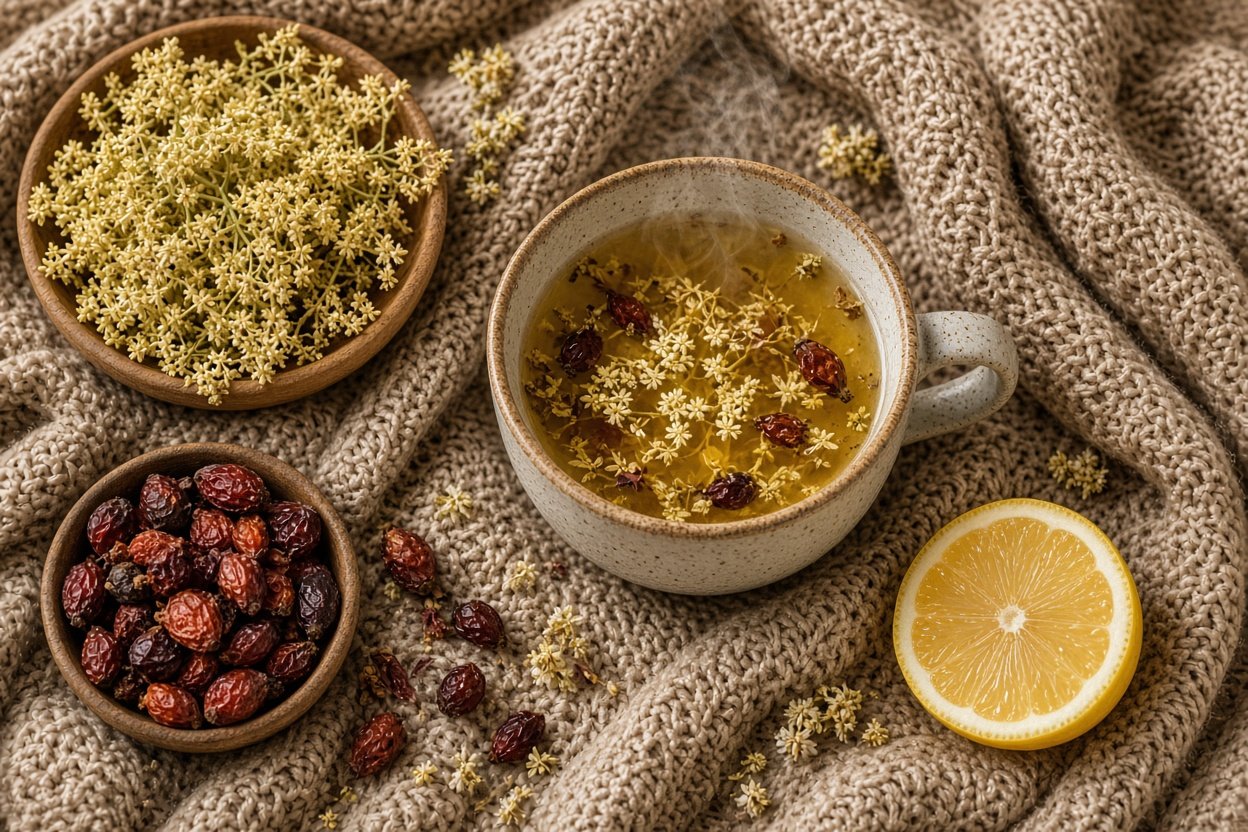
A herbal cold and flu tea becomes a lot more relevant the moment the weather turns, and October is exactly that moment — the first proper cold usually lands somewhere between the last warm week and the first frost. Before reaching for tablets, a lot of people reach for something warm first, and there’s a genuine tradition behind that instinct.
What’s in a Herbal Cold and Flu Tea
Our Strong Cold and Flu Tea is built around rosehip, elderflower, raspberry leaves, hibiscus, lemon balm, lime flower, sweet fennel, and wild strawberry leaves — a broader blend than the single-herb elderberry syrups most people are already familiar with.

What the Research Says
- Elderflower (Sambucus nigra) has the most research behind it of anything in this blend. A review of clinical evidence found elder preparations associated with a reduction in the duration and severity of upper respiratory symptoms, traditionally used to increase sweating and “break” a cold faster.
- Rosehip is naturally high in vitamin C, one of the most consistently cited nutrients for general immune support.
- Lemon balm and lime flower are traditionally used together for their calming effect — relevant here because poor sleep during illness tends to prolong it.
- Hibiscus adds both tartness and its own vitamin C content, rounding out the flavour without needing added sugar.
An Honest Note on What It’s For
This tea supports comfort and hydration while your body does the actual work of fighting off a cold — it isn’t an antiviral, and it won’t shorten a flu the way an actual treatment would. Warm fluids genuinely help loosen congestion and soothe a sore throat, which is real, useful relief even if the mechanism is more “comfort and hydration” than “cure.” If symptoms are severe, persistent beyond about a week, or you develop a high fever, that’s the point to see a doctor rather than reach for another cup.

How to Use It
Most people find it most useful right when the first symptoms show up — a scratchy throat, the first sniffle — rather than waiting until a cold is in full swing. Two to three cups a day during that window, brewed for the full steep time to get the most out of the elderflower and rosehip, is the typical approach. It also works well as a preventative evening habit through autumn and winter, when everyone around you seems to be passing something around.
A Note for Women
The raspberry leaf and lemon balm in this blend are also traditionally used to ease premenstrual symptoms alongside their cold-and-flu role, so it does double duty for some people beyond just the winter months.
Looking for something to pair it with once symptoms ease and digestion needs settling back down? Our guide to turmeric tea for inflammation covers the next stage of a lot of people’s post-illness routine.
Ready for the season? Stock up on the Strong Cold and Flu Tea before the first cold of the year hits.
A Word on Prevention
A lot of people only reach for this once symptoms have already set in, but it works just as well as a preventative evening habit through the colder months — especially once someone else in the house is already fighting something off. A daily cup from October through to spring is a low-effort habit that costs nothing to try, even on weeks when nobody around you is unwell yet.
This article is for general wellness information and isn’t a substitute for medical advice. See a doctor if symptoms are severe, include a high fever, or last longer than about a week, and consult them before use if you are pregnant, nursing, or managing a medical condition.