

Blog
Black Seed Oil vs Black Seed Bitters: What’s the Difference?

If you’ve spent any time looking into black seed, you’ve probably noticed it comes in more than one form. Two of the most popular are black seed oil and black seed bitters. Both start with the same small, dark seed, Nigella sativa, but they’re made differently, they taste completely different, and they fit into a daily routine in different ways.
So which one should you choose? In this guide we break down black seed oil vs black seed bitters: what each one is, what’s actually inside the bottle, how people use them, and the questions worth asking before you buy.
A Quick Introduction to Black Seed
Black seed, also called black cumin or nigella, has been used in traditional wellness practices across the Middle East, North Africa and South Asia for centuries. The seeds are small, matte black and slightly peppery, with a flavour somewhere between onion, oregano and cumin.
Most modern interest in black seed centres on thymoquinone, a naturally occurring compound found in the seed’s oil. Thymoquinone has been studied for its antioxidant properties, and black seed in general has been the subject of a growing number of small studies looking at areas such as digestion, skin and general wellbeing. The research is promising in places but still early, so it’s best to think of black seed as a traditional food and wellness ingredient rather than a cure for anything.
If you’d like a broader overview first, our guide Black Seed Explained: Honey, Oil & Bitters covers all three common formats. This article zooms in on the two that people most often compare.
What Is Black Seed Oil?
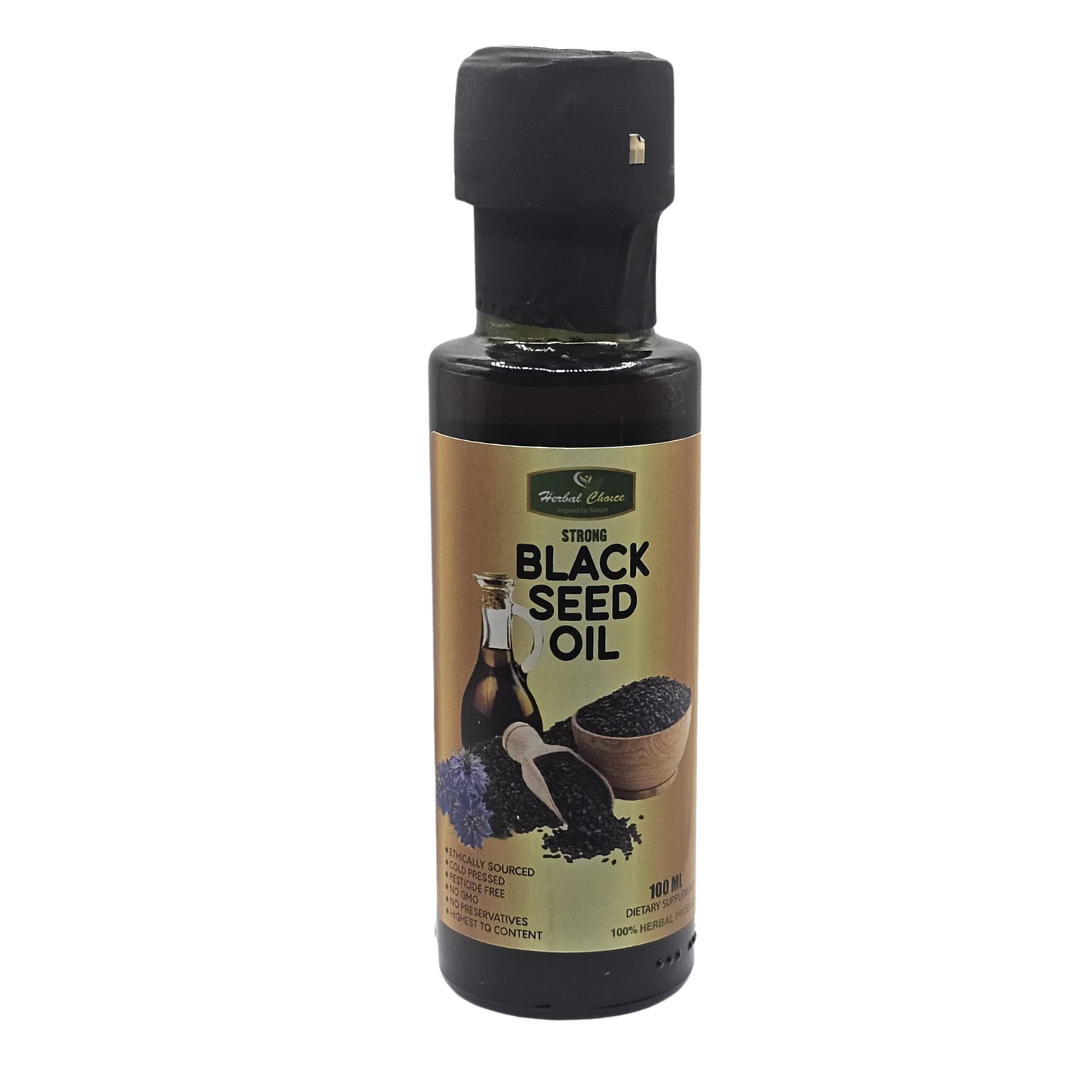
Black seed oil is exactly what it sounds like: oil pressed from Nigella sativa seeds. The best versions are cold-pressed, meaning the seeds are pressed slowly without high heat, which helps preserve the oil’s natural compounds, aroma and colour.
Because it’s a single-ingredient product, black seed oil gives you black seed in its most concentrated, straightforward form. It’s thick, golden to dark amber, and has a strong, peppery, slightly bitter taste that some people find quite intense at first.
How People Use Black Seed Oil
- By the spoon: A small amount taken on its own, often followed by water or juice to wash down the strong taste.
- Mixed with honey: Stirring it into a spoonful of raw honey softens the bite considerably.
- In food: Drizzled over salads, yoghurt or hummus once a dish is finished (it’s not suited to high-heat cooking).
- On skin and hair: Many people use it topically as a nourishing oil, massaged into the scalp or applied to dry areas of skin.
Always follow the directions on the label for how much to take, and start small if you’re new to it.
What Are Black Seed Bitters?
Black seed bitters are a very different product. Rather than a single pressed oil, bitters are a liquid herbal tonic made by combining a black seed extract with a range of other traditional botanicals in a water base.
The idea behind herbal bitters comes from a long tradition, particularly in Caribbean and West African households, of taking a small dose of bitter herbs after meals. Bitter flavours are traditionally associated with supporting digestion, which is why bitters are usually taken after eating.
Our Super Blackseed Bitters 473ml is a good example of how these formulas work. It’s built around a black seed extract (20:1), combined with 33 further botanicals, including:
- Milk thistle, dandelion root and burdock root
- Ginger root, turmeric root and black pepper
- Neem leaf and bitter melon
- Moringa leaf, ashwagandha and astragalus root
- Fennel seed, cardamom and liquorice
- Senna leaf
It’s prepared with purified alkaline water and comes in a 473ml bottle, which gives roughly 30 servings of 16ml (about two tablespoons) taken once daily after meals.
Black Seed Oil vs Black Seed Bitters: 5 Key Differences
1. Single Ingredient vs Multi-Herb Blend
This is the biggest difference. Black seed oil is black seed and nothing else. Bitters are a blend in which black seed is the lead ingredient but sits alongside many other herbs. If you want to know exactly what you’re taking and focus purely on black seed, oil is the simpler choice. If you like the idea of a broad traditional herbal tonic, bitters offer far more variety in one bottle.
2. Format and Concentration
Black seed oil is a pure oil, so a small amount goes a long way. Bitters are water-based, so the serving size is larger (a couple of tablespoons) but each serving contains a spread of different botanicals rather than a large dose of any one of them.
3. Taste
Neither is exactly sweet. Black seed oil is oily, peppery and pungent. Bitters, as the name suggests, are distinctly bitter and herbal, with warming notes from ginger and spice. Some people find the thin liquid texture of bitters easier to take than oil; others prefer the oil once it’s mixed with honey.
4. How and When You Take Them
Black seed oil is flexible. You can take it by the spoon, add it to food or use it on your skin. Bitters are designed for one job: a daily dose after a meal, following the traditional bitters ritual. Bitters aren’t meant for topical use or cooking.
5. Who Each One Suits
Because bitters contain a wider range of herbs, including senna leaf, which has a traditional laxative effect, they come with more cautions. The label advises against using them during pregnancy, while breastfeeding or during the menstrual cycle unless advised by a healthcare professional, and not taking them with alcohol. Black seed oil is a simpler product, but it’s still a concentrated supplement, so anyone pregnant, on medication or managing a health condition should speak to a professional first.
Side-by-Side Comparison
| Black Seed Oil | Black Seed Bitters | |
|---|---|---|
| Main ingredient | Cold-pressed Nigella sativa oil | Black seed extract 20:1 |
| Other ingredients | None | 33 traditional botanicals |
| Format | Pure oil | Water-based liquid tonic |
| Typical use | Small spoonful, in food, or on skin and hair | About 16ml once daily after meals |
| Taste | Peppery, pungent, oily | Bitter, herbal, warming |
| Best for | Those who want pure black seed | Those who want a traditional after-meal tonic |
Which One Should You Choose?
There’s no single right answer. It comes down to what you want from black seed and how you like to take things.
Choose black seed oil if:
- You want a pure, single-ingredient product
- You’d like to use black seed on your skin or hair as well as internally
- You prefer a small serving and don’t mind a strong taste
- You want to add it to food or mix it with honey
Choose black seed bitters if:
- You like the tradition of a daily after-meal herbal tonic
- You’re interested in a broad blend of digestive and cleansing herbs, not just black seed
- You find oils hard to take and prefer a liquid
- You’re comfortable with the cautions that come with multi-herb formulas
Some people use both, keeping the oil for skin, hair or a spoonful with honey, and taking bitters after their main meal. If you’re thinking of doing that, it’s sensible to check with a healthcare professional first, especially if you take any regular medication.
A Third Option: Black Seed Honey
If neither the strong taste of oil nor the bitterness of bitters appeals, honey infused with black seed is the gentlest way in. It’s sweet, easy to stir into tea and makes black seed feel more like a treat than a supplement. Our Pure Honey Infused with Black Seed is a popular choice for anyone who wants the flavour of black seed without the intensity.
And if you prefer your herbs in a cup, black seed also features in our Strong Soursop Blackseed and Ginger Tea. You can read more about that blend in Soursop, Black Seed & Ginger Tea: A Blend Worth Knowing.
Tips for Buying Black Seed Products
- Check the processing: For oil, look for cold-pressed and unrefined.
- Look at the bottle: Oil should come in dark or amber glass to protect it from light.
- Read the full ingredient list: With bitters, know every herb you’re taking, especially if you’re sensitive to any of them.
- Read the cautions: Multi-herb tonics often have specific guidance on pregnancy, medication and alcohol.
- Store properly: Keep oil and bitters in a cool, dark place, and shake bitters before each use.
Frequently Asked Questions
Is black seed oil stronger than black seed bitters?
In terms of black seed itself, the oil is more concentrated because it’s a single ingredient. Bitters spread their serving across many herbs, so they’re broader rather than stronger.
Can I take black seed bitters every day?
Super Blackseed Bitters is labelled for once-daily use after meals. Because it contains senna and other active herbs, follow the label closely and speak to a healthcare professional if you plan to use it long term or have any health condition.
Can I put black seed oil in tea?
You can, but oil and water don’t mix well, so it will float on top. Stirring it into honey first and then adding the honey to warm (not boiling) tea works better.
Find the Right Black Seed for You
Whether you want the simplicity of a pure oil or the tradition of a daily herbal tonic, black seed is easy to work into your routine. If you’re after a broad, after-meal tonic built around black seed, try our Super Blackseed Bitters. If you’d rather keep things pure and versatile, our Strong Black Seed Oil (100ml) is cold-pressed and ready to use by the spoon, in food or on skin and hair.
This article is for general information only and is not medical advice. Herbal products are not intended to diagnose, treat, cure or prevent any disease. Always speak to a healthcare professional before starting a new supplement, especially if you are pregnant, breastfeeding, taking medication or managing a health condition.