
Blog
Instant Ginger Tea vs Fresh Ginger Tea: Which Is Better?

The Short Answer
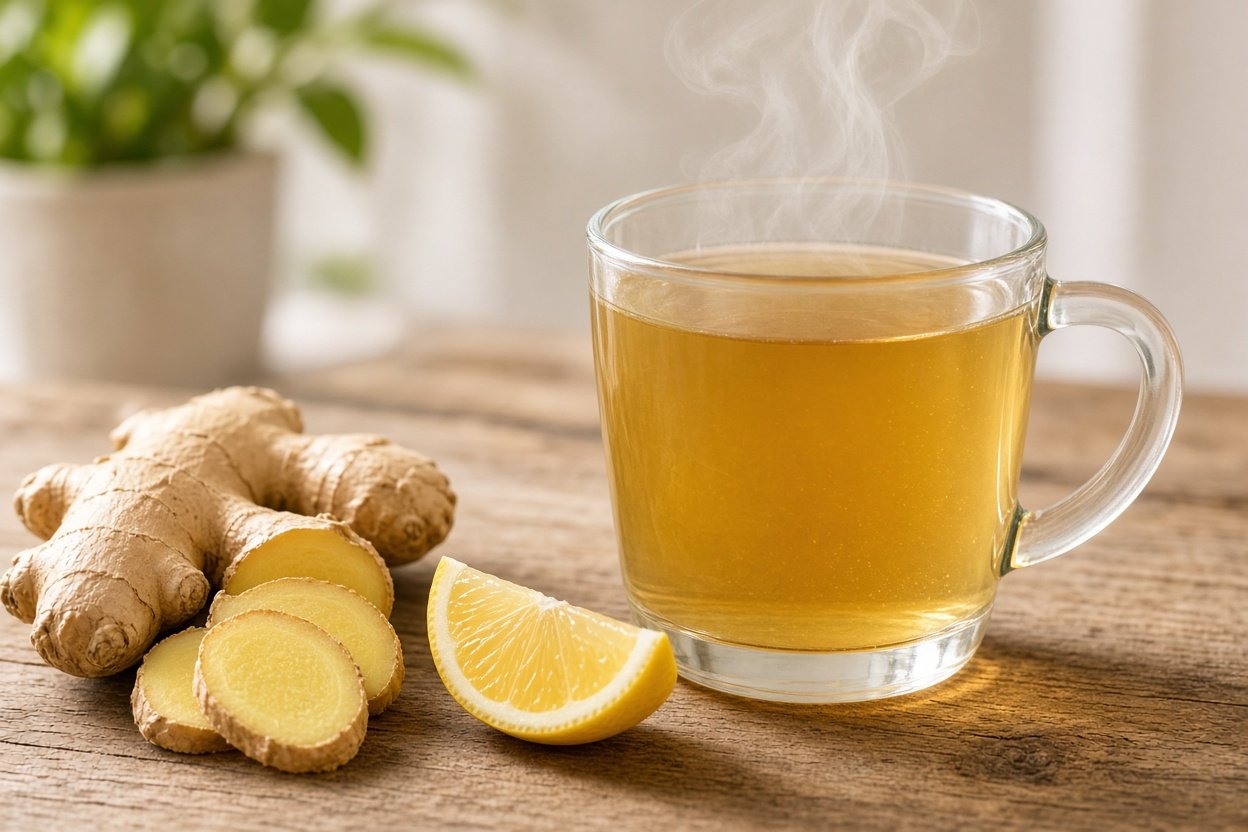
If you have ten minutes and enjoy the ritual, fresh ginger tea gives you the brightest, spiciest cup. If you want a warming drink in thirty seconds, at your desk, on a train or at 6am before the school run, instant ginger tea is the more realistic habit. Neither is “better” in every situation, and plenty of people keep both in the cupboard.
The rest of this guide looks at where each one wins, so you can choose based on how you actually drink tea rather than how you imagine you will. If you want the wider background first, our guide to the benefits of ginger tea covers what the research says about ginger itself.
What Fresh Ginger Tea Gives You
Fresh ginger tea is made by slicing or grating the root and steeping it in hot water, usually for ten minutes or so. What you get is a lively, citrusy heat with a clean finish. The sharpness is real, and it is the main reason people who love fresh ginger rarely switch.
Fresh ginger also puts you in control. A few thin slices make a gentle cup; a thumb of grated root simmered for fifteen minutes makes something that tingles at the back of the throat. You decide the strength, and you can add lemon, mint or a spoonful of honey while it brews.
The downsides are practical rather than anything to do with the ginger. Fresh root needs peeling or at least scrubbing, slicing, simmering and straining. It also has a shelf life: a half-used piece in the fridge goes soft and dull faster than most people expect. If you only make ginger tea once a week, some of it will end up in the bin.
What Instant Ginger Tea Gives You
Instant ginger tea comes as granules or sachets that dissolve straight into just-boiled water. There is no straining, no chopping and no pan to wash. The flavour is rounder and slightly sweeter than fresh root, and it is consistent: the tenth cup tastes like the first.
That consistency is the real selling point. A strong instant ginger drink is measured out for you, so you are not guessing how much root to use. It travels well, it keeps for months in the cupboard, and it works anywhere there is a kettle. For anyone who has tried to build a daily ginger habit and given up because of the prep, instant is usually what makes it stick.
What you lose is a little of the fresh, zesty edge, and some control over exactly how strong the cup is. Good instant blends make up for it by being genuinely ginger-forward rather than a pale, sweet imitation, which is why it is worth checking how a product describes its strength.
Taste and Strength Compared
Fresh ginger is sharper, more aromatic and a bit citrusy. Instant ginger is warmer, smoother and more rounded, especially the versions made with honey granules. If you find fresh ginger harsh, instant is often the easier introduction. If you find instant too mellow, adding a few slices of fresh root to your mug is an easy way to turn the volume up.
Strength is where “strong” blends earn their name. A well-made instant ginger sachet can give a noticeably firmer kick than a weak homemade brew, while a heavily simmered fresh pot can be stronger than any sachet. The difference is that the sachet delivers the same strength every time, and the pot depends on how generous you were with the root that day.
Sugar, Honey and What Is Actually in the Cup
This is the biggest practical difference, and it is worth checking labels. Some instant ginger drinks are sweetened heavily, and some are barely ginger at all. Others are built around honey granules for a softer, more soothing cup.
If you are cutting back on sugar, look for a version made without it. Our strong instant ginger tea with black pepper contains no honey and no sugar, and comes as 30 caffeine-free sachets, which makes it a good fit for people who want the convenience of instant without the sweetness. We cover the different ways to enjoy it in our sugar-free ginger tea guide.
If you like a little sweetness, the Strong Instant Ginger Lemon with Honey Granules is our most popular instant ginger blend. The lemon brightens the flavour and the honey rounds off the heat, which is why it suits people who find plain ginger a bit fierce.
With fresh ginger, the sweetness is entirely up to you. A teaspoon of raw honey stirred in after the tea has cooled slightly is the classic choice. Adding honey straight to boiling water is common, but letting the cup sit for a minute first is gentler on the flavour.
Cost, Waste and Convenience
Fresh ginger root looks like the cheaper option, and per cup it can be. But if half of it spoils, that advantage shrinks. Instant sachets cost more per serving on paper, yet nothing is wasted and there is no prep time to count.
A fair way to think about it: fresh ginger is excellent value if you will use it up within a week or two. Instant is better value if your ginger habit is occasional, unpredictable or squeezed into busy mornings.
Side by Side
| Fresh ginger tea | Instant ginger tea | |
|---|---|---|
| Prep time | 10 to 15 minutes | Under a minute |
| Flavour | Sharp, citrusy, aromatic | Warm, rounded, smooth |
| Strength | You control it | Consistent every cup |
| Sweetness | Whatever you add | Depends on the blend |
| Shelf life | Days to a couple of weeks | Months |
| Best for | Slow evenings and weekends | Work, travel and busy mornings |
How to Make Each One
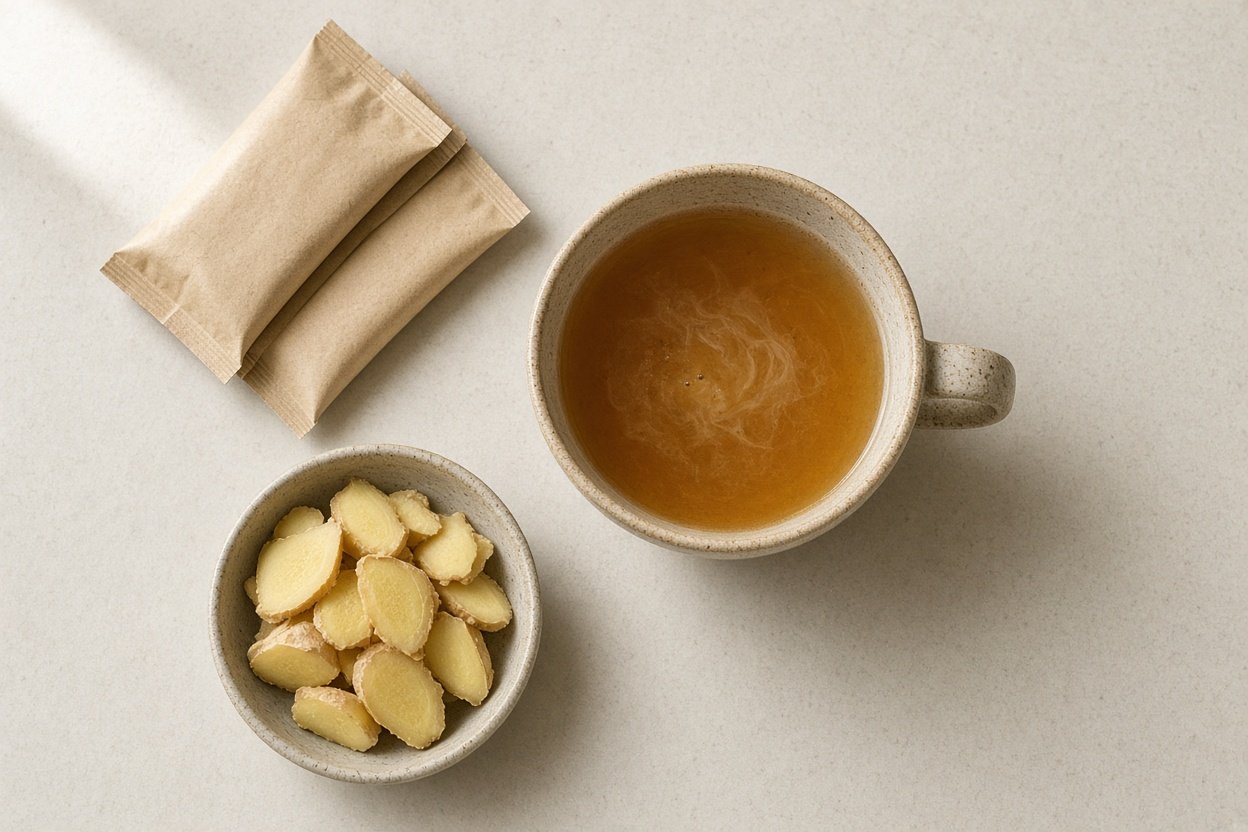
Fresh ginger tea: Scrub a 2 to 3 cm piece of root and slice it thinly. Add it to a small pan with about 300ml of water, bring to the boil, then simmer gently for 10 minutes. Strain into a mug and add lemon or honey to taste. For a stronger cup, grate the root instead of slicing it and simmer a few minutes longer.
Instant ginger tea: Tip one sachet into a mug, pour over just-boiled water and stir until the granules dissolve. Leave it for a minute so it cools to a drinkable temperature. If you want more bite, add a squeeze of lemon or a slice of fresh ginger.
Want something cooler? The instant ginger mint with honey is lovely over ice, and we explain how in our ginger mint tea guide. If you prefer to build your own, our lemon and ginger tea guide walks through the fresh version step by step.
So Which Should You Choose?
Choose fresh ginger if you enjoy cooking, drink ginger tea a few times a week, and like adjusting the flavour yourself. Choose instant if you want a reliable cup in under a minute, if you are building a daily habit, or if you keep running out of fresh root.
A sensible middle path is to keep a box of instant sachets for weekdays and use fresh root at the weekend. That way you never skip your ginger because it was too much effort.
If you are ready to try the instant route, start with the Strong Instant Ginger Lemon with Honey Granules for a bright, soothing cup, or the sugar-free ginger tea with black pepper if you would rather skip the sweetness.
Common Questions
Is instant ginger tea as good as fresh? They are different rather than better or worse. Fresh is sharper and more aromatic; instant is smoother and far more convenient. Which one suits you depends on how you will actually use it.
Does ginger tea contain caffeine? Ginger itself is naturally caffeine-free, so ginger tea is a good evening option. Always check the label if a blend includes other ingredients such as green or black tea.
How many cups a day is sensible? Most people are comfortable with one to three cups. If you are pregnant, take blood-thinning medication or have a medical condition, check with your doctor or pharmacist before drinking ginger regularly.
Can I mix instant and fresh? Yes. Adding a few slices of fresh ginger to an instant mug is an easy way to get more heat and aroma without the full simmering process.
This article is for general information and is not a substitute for medical advice. Speak to your doctor before using herbal products if you are pregnant, nursing or managing a medical condition.