

Blog
Moringa 101: Tea, Powder & Seeds Explained

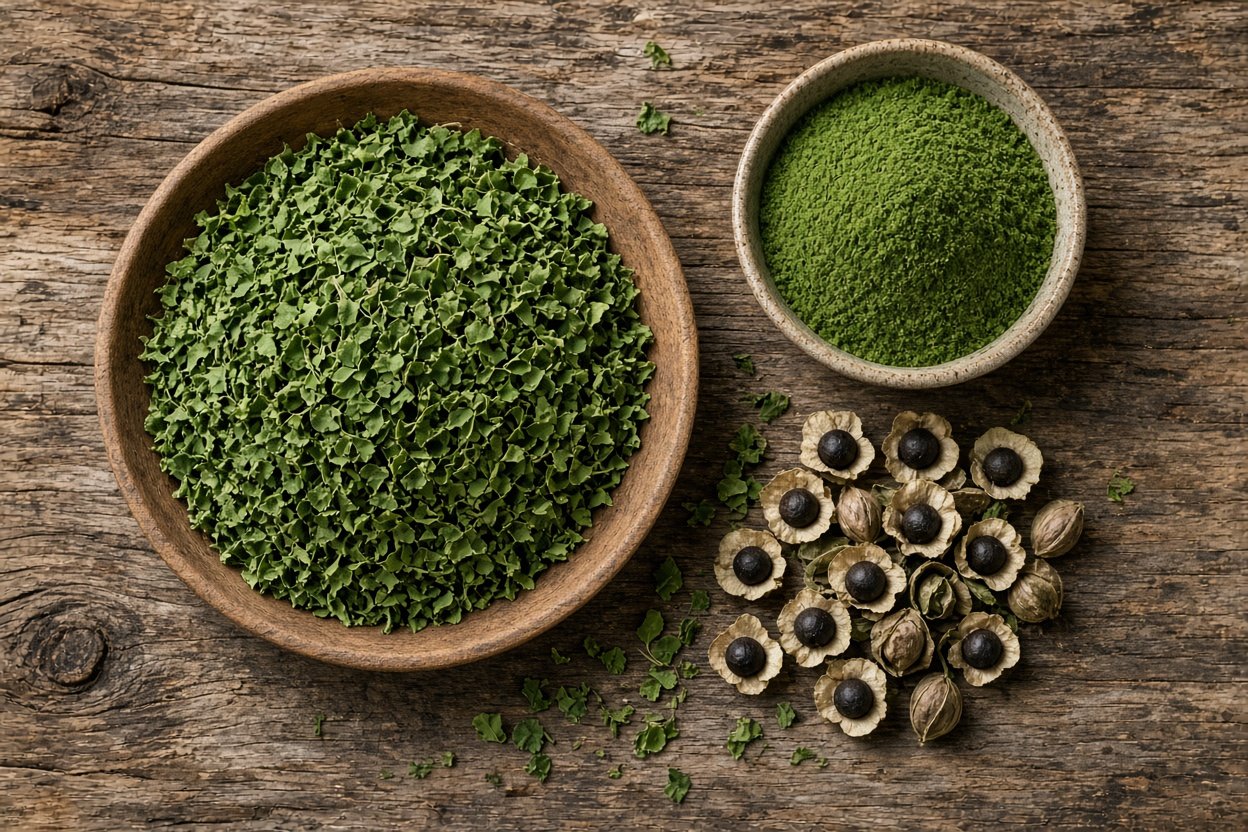
Moringa is a fast-growing tree native to South Asia, and the moringa tea benefits people talk about today come from the same leaves that have been dried, brewed, and stirred into drinks across South Asia and Africa for generations. Moringa is sold in three main forms — dried tea, powder, and whole seeds — and all three come from the same plant, though each suits a different use in the kitchen.
What Is Moringa?
Moringa oleifera, sometimes called the “drumstick tree” or “miracle tree”, grows widely across South Asia and Africa. Its leaves have been used in cooking and traditional drinks for generations, and today they’re most commonly sold dried, either whole or ground into a fine powder.
Leaf, Powder or Seed: What’s the Difference?
Dried whole leaf moringa is closest to its natural form and works well steeped as a tea. Moringa powder is the same leaf ground finer, making it easy to stir into smoothies, water or cooking. Moringa seeds are a different part of the plant entirely, with a firmer texture and a slightly more bitter, peppery taste — some people toast or roast them before eating.

The Moringa Tea Benefits Worth Knowing
Moringa’s reputation rests on its leaf being unusually nutrient-dense for a plant that grows so easily in warm climates — it’s been studied as a food source specifically because it grows quickly in places where other nutrient-rich crops struggle. Brewed as a tea, moringa offers a gentle, caffeine-free way to work the leaf into a daily routine without needing to cook with it or blend it into a smoothie every time.
How to Brew Moringa Tea
- Use one to two teaspoons of dried whole leaf moringa per cup.
- Pour freshly boiled water over it and cover to keep the aroma in.
- Steep for 5 to 8 minutes — moringa can taste grassy if left much longer.
- Strain and drink warm, or let it cool for an iced version.
Powder: A More Flexible Way to Use the Leaf
If tea isn’t your preferred format, moringa powder offers more flexibility. It stirs easily into smoothies, water, or yoghurt, and can be added to soups, sauces, or baked goods without needing to steep or strain anything. The trade-off is a more concentrated, grassier flavour that a cup of brewed tea softens through dilution and steeping time.
Shop the Range
Our Dried Whole Leaf Moringa is the closest to brewing a traditional cup, our Moringa Powder is suited to smoothies and cooking, and our Moringa Seeds are for those who want to try the plant in its whole-seed form.
Where Moringa Fits Among Other “Super” Ingredients
Moringa is frequently mentioned alongside ginger, turmeric, and hibiscus as one of the ingredients that earns a tea the “super tea” label — our guide to what makes a tea super covers why moringa and similar nutrient-dense leaves show up so often in that category, and what else to look for in a well-formulated blend.
Moringa in Cooking Beyond Tea
Across the regions where moringa grows, the leaves are also cooked directly as a vegetable, added to soups and stews, or dried and crumbled over rice and other dishes. Tea and powder are simply the more portable, ready-to-use versions of an ingredient that’s traditionally eaten as food first.
What to Look for When Buying
Colour is a useful indicator of quality when buying dried moringa leaf or powder — a vivid, deep green suggests the leaves were dried carefully and haven’t lost too much of their natural character, while a dull, brownish tint can mean the batch is older or was dried poorly.
Where Moringa Comes From
Moringa has a long history of use across India, where it originates, and it has since spread to parts of Africa and Southeast Asia as both a food crop and a traditional ingredient. You can read more about the plant on Wikipedia’s moringa entry.
A Simple Way to Start
If you’ve never tried moringa before, tea is the gentlest entry point — a short steep keeps the flavour mild and grassy rather than intense, and it’s easy to adjust the strength by using less leaf or steeping for a shorter time until you know how much you enjoy.
Storing Moringa Properly
Whichever form you buy, moringa keeps best in a sealed container away from direct light and moisture — like most dried herbs, exposure to air and light gradually fades both its colour and its flavour over time, so a cupboard rather than an open shelf is the better home for it.
Who Should Be Cautious
Moringa is generally well tolerated, but very high intakes of the leaf or powder can have a mild laxative effect in some people. If you’re pregnant, breastfeeding, on medication, or managing a health condition, check with a healthcare professional before making it a regular habit.
Moringa’s Growing Popularity Outside South Asia
Moringa has moved well beyond its traditional growing regions in recent years, showing up in health food shops and online stores across Europe and North America as interest in nutrient-dense plant foods has grown. Much of that popularity rests on the same qualities that made it a staple crop in South Asia and Africa in the first place: it grows quickly, tolerates poor soil and drought better than many other leafy crops, and packs a lot of nutrition into a small, easy-to-dry leaf. That combination of practicality and nutrient density is part of why moringa tea benefits get mentioned so often in conversations about sustainable, nutrient-rich foods.
How Moringa Compares to Other Green Powders
Moringa is often mentioned alongside other green powders like spirulina, chlorella, or wheatgrass, all of which share a reputation for being concentrated, nutrient-dense ways to add greens to a diet without cooking a vegetable. What sets moringa apart is partly its versatility — it works as a tea, a powder, or a whole seed, whereas many other green powders only come in one format. Its flavour is also generally considered milder and less intensely “green” than spirulina or chlorella, which is one reason people who find other green powders difficult to drink often find moringa tea more approachable as a starting point.
Making Moringa Part of a Daily Routine
Because moringa tea is naturally caffeine-free, it fits easily into a routine at almost any time of day, whether that’s a first cup in the morning, a mid-afternoon pick-me-up that won’t affect sleep, or a calming drink in the evening. Many people find that starting with a single cup a day, brewed as described above, is an easy way to build the habit before deciding whether to also add the powder to smoothies or cooking. Consistency tends to matter more than quantity — a small daily cup is a more sustainable habit than an occasional large dose.
Frequently Asked Questions
Does moringa tea contain caffeine?
No, moringa is naturally caffeine-free, making it suitable for any time of day.
What does moringa taste like?
Expect an earthy, slightly grassy flavour, similar in character to green tea but milder. A short steep keeps the flavour gentle.
Can I mix moringa powder into drinks other than smoothies?
Yes — it stirs easily into water, juice or yoghurt. Start with half a teaspoon and adjust to taste.
Should I check with a doctor before trying it?
As with any herbal ingredient, if you have a health condition or take medication, it’s worth checking with a healthcare professional first.
Ready to try it? Explore the full moringa range and find the format that fits your routine.
This article is for general wellness information and isn’t a substitute for medical advice.