
Blog
What Makes a Tea “Super”? Our Guide to Super Teas

“Super tea” has become a popular label on wellness shelves, but what actually earns a blend that title isn’t always clear. Super tea blends like our Super Detox Tea are built differently from an everyday cup, and this guide breaks down exactly what separates a genuine super tea from a bag of leaves with a bold label.
The Term You’ve Seen Everywhere
Walk down any wellness aisle and you’ll spot the word “super” attached to teas, seeds, powders, and berries alike. It’s a marketing-friendly word, which means it gets used loosely — but there are a few real characteristics that separate a genuinely well-formulated super tea from one riding on the label alone.
It’s About the Ingredients
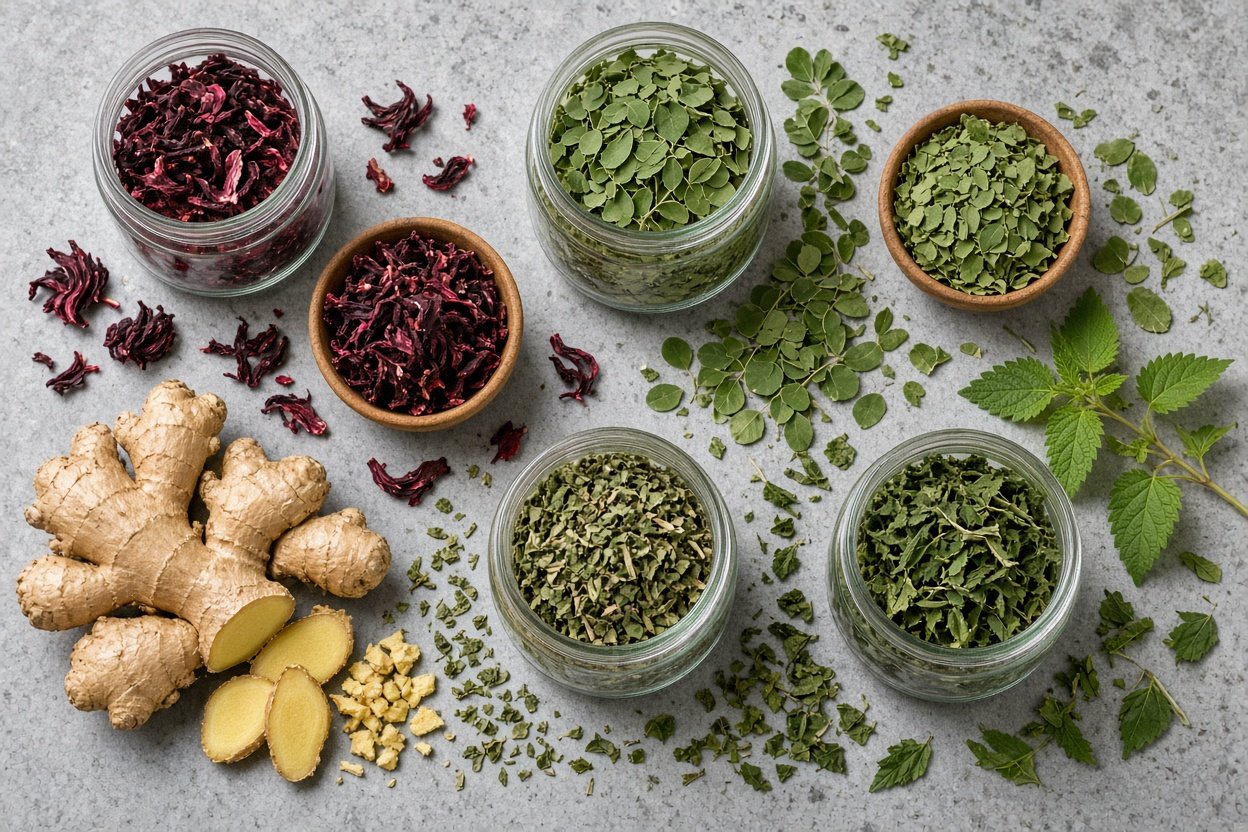
A true super tea is built around ingredients known for concentrated wellness compounds — think ginger, turmeric, hibiscus, moringa, gymnema sylvestre, or bitter melon. Rather than a single herb steeped alone, super teas are usually thoughtful blends designed to combine several beneficial ingredients into one cup, each contributing something different rather than repeating the same effect.

The Science Behind the Category
Much of what makes these ingredients “super” in the first place comes down to their polyphenol and antioxidant content. Research reviewing tea polyphenols and their role in human health has documented a range of antioxidant and metabolic effects across different tea compounds — the scientific basis that “super” labelling is often, loosely, pointing back to. That doesn’t mean every super tea on a shelf has been through the same level of research, but it explains why certain ingredients earn the reputation in the first place.
It’s About Purpose
Most super teas are formulated with a specific goal in mind — digestion, immunity, energy, detox, or weight management — rather than being a general-purpose drink. Our own Super Detox Tea is built around that same principle: a multi-ingredient blend aimed squarely at one outcome, rather than a vague, everything-and-nothing formula. That intentional formulation is part of what sets a real super tea apart from a standard cup.
It’s About Quality
Ingredient sourcing matters just as much as the ingredient list itself. Whole, high-quality dried herbs and roots retain more of their natural compounds and flavour than lower-grade fillers, which is why sourcing is a key part of what makes a “super” tea genuinely worth the name rather than a marketing exercise built on a cheap base.
How Super Teas Differ From Everyday Herbal Tea
An everyday herbal tea — a plain peppermint or chamomile, for example — is usually one ingredient, brewed for flavour and gentle, general comfort. A super tea is closer to a formulated blend: multiple ingredients working toward one specific outcome, in ratios chosen deliberately rather than combined for taste alone. Neither approach is “better” outright — it depends on whether you want a simple daily cup or a blend targeting something specific.
Super Teas and the Weight-Loss Conversation
Some of the most searched super teas fall into the slimming and detox category, riding the same wave of interest that’s pushed more people toward structured wellness routines generally. If that’s what brought you here, our deeper breakdown of what a herbal weight-loss tea can and can’t do is worth reading before you pick a blend — it covers honest expectations rather than shortcuts.
Common Super Tea Ingredients and What They Do
Beyond the ones already mentioned, a few other ingredients show up regularly in super tea formulations. Bitter melon is often included for its fibre content and traditional association with healthy post-meal blood sugar response. Gymnema sylvestre is used for its traditional reputation of dulling sweet cravings. Lemongrass and hibiscus tend to appear more for flavour balance and a mild diuretic reputation, rounding out a blend so it doesn’t taste purely medicinal.
Reading a Super Tea Label Properly
The ingredient list on a super tea box tells you almost everything you need to know before buying. Ingredients are typically listed by weight, so whatever appears first is the dominant component of the blend — worth checking if you’re specifically trying to target one ingredient’s benefits rather than a general blend. A short list of recognisable, whole ingredients is usually a better sign than a long list padded with fillers or flavourings you can’t pronounce.
Are Super Teas Backed by Clinical Trials?
Individual ingredients in super teas — ginger, turmeric, green tea catechins — often have a reasonable body of clinical research behind them. The finished blend as a whole, though, is rarely tested directly in a clinical trial the way a single-ingredient supplement might be. That’s not necessarily a red flag; it’s simply the nature of a multi-ingredient product. The more useful question is whether each individual ingredient in the blend has some research behind its traditional use, rather than expecting a trial on the exact combination itself.
Who Super Teas Are (and Aren’t) For
Super teas are a reasonable fit for anyone looking to build a more intentional daily habit around a specific goal, alongside — not instead of — the basics of diet, sleep, and activity. They’re not a fit for anyone expecting a dramatic, fast result, or as a substitute for medical treatment of a diagnosed condition. Treat the “super” in the name as a description of the formulation, not a promise about the outcome.
Building Your Own Rotation
Many people who get into super tea blends end up keeping two or three different blends on hand, rotating based on the day or the season — a digestion-focused blend after heavier meals, a calming blend in the evening, an energy blend for sluggish mornings. There’s no rule against mixing and matching, as long as you’re not stacking blends that target the exact same system at the same time.
How to Choose the Right Super Tea Blends
- Check the ingredient list — fewer, high-quality ingredients are usually better than long, vague ones.
- Match the blend to your goal (digestion, immunity, calm, detox, etc.) rather than picking based on the word “super” alone.
- Look for teas free from artificial flavourings or unnecessary fillers.
- Be realistic about the timeline — a super tea supports a routine, it doesn’t replace one.
A Word on Overlapping Blends
If you’re drinking more than one targeted super tea at a time — say, a detox blend and a blood-sugar-focused blend — it’s worth checking whether their ingredients overlap or work on the same system. Stacking similar formulas isn’t usually necessary and can sometimes work against the effect you’re going for. Picking one blend that matches your main goal, and sticking with it consistently, tends to work better than layering several at once.
Realistic Expectations
A super tea is a supporting habit, not a shortcut. What’s realistic is a gradual, cumulative effect from regular use — better digestion, steadier energy, or a gentler detox feeling — rather than an overnight transformation. Treat the “super” label as a signal of thoughtful formulation, not a promise of instant results.
Browse our Super Detox Tea and find a blend built around a goal, not just a buzzword.
Common Myths About Super Teas
A few myths persist around this category worth clearing up. Super teas are not a substitute for whole foods or a balanced diet, no matter how nutrient-dense the ingredient list looks on paper. They’re also not inherently “stronger” than a regular herbal tea just because of the label — strength depends on the actual concentration and quality of the ingredients used, not the marketing term attached to the box. And a tea being “natural” doesn’t automatically make it appropriate for everyone; some ingredients, like senna or bitter melon, still warrant caution for certain people or medical conditions.
This article is for general wellness information and isn’t a substitute for medical advice.