

Blog
Chamomile Tea Benefits: What the Research Says

Why Chamomile Is Everywhere
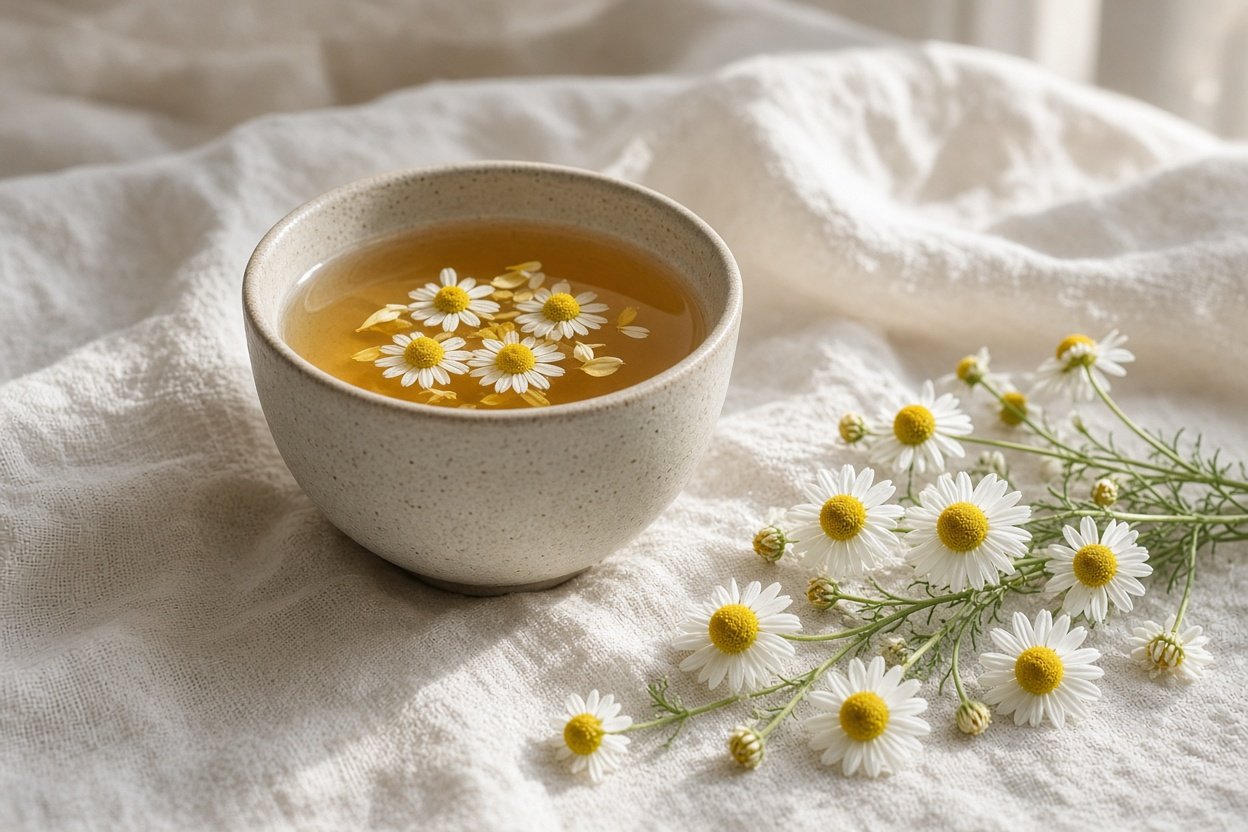
Chamomile is one of the oldest herbal teas still in everyday use. Made from the dried flower heads of the daisy-like chamomile plant, it has been drunk for centuries across Europe, North Africa and the Middle East as a gentle, soothing cup. It is naturally caffeine-free, mild in flavour and easy to find, which is why it sits in almost every herbal tea cupboard.
This guide looks at what chamomile tea may genuinely help with, where the evidence is thinner than the marketing, who should take care, and how to brew a cup that actually tastes good. If you want a more practical wind-down routine, our guide to a chamomile evening ritual picks up where this one leaves off.
The Main Chamomile Tea Benefits
It may help you wind down. Chamomile contains a flavonoid called apigenin, which binds to some of the same receptors in the brain that are involved in relaxation. Small studies have suggested that chamomile may modestly improve sleep quality and reduce feelings of anxiety, although the research is mixed and the effects are gentle. The ritual itself helps too: a warm, quiet cup at the same time each evening is a cue for your body to slow down.
It may ease digestive discomfort. Chamomile has a long traditional use for settling the stomach, easing mild bloating and calming indigestion after a heavy meal. It is a milder option than peppermint, which some people find too sharp. We compare several options in our guide to the best tea for bloating and gas.
It is rich in plant compounds. Chamomile contains flavonoids and other antioxidant compounds. As with most herbal teas, this is a useful bonus rather than a reason to expect dramatic results.
It is a gentle swap for caffeine. If you are trying to cut back on coffee or builder’s tea in the afternoon and evening, chamomile gives you a warm, comforting cup without anything stimulating.
What Chamomile Tea Cannot Do
It is worth being honest here. Chamomile is not a sleeping tablet, and it will not fix chronic insomnia or an anxiety disorder. Studies that found benefits often used concentrated extracts rather than a single cup of tea, and results across trials have been inconsistent. Think of chamomile as a supportive part of a good bedtime routine, alongside regular sleep times, dim lights and less screen time. Our comparison of herbal sleep tea and melatonin explains how the options differ.
Who Should Be Careful With Chamomile?
People with allergies to the daisy family. If you react to ragweed, chrysanthemums, marigolds or daisies, you may react to chamomile too. Stop drinking it if you notice itching, swelling or a rash.
People taking blood-thinning medication. There are reports of chamomile interacting with warfarin, so speak to your doctor or pharmacist first.
People taking sedatives or sleep medication. Chamomile has mild sedative properties, so check before combining them.
Pregnancy. Many healthcare professionals advise caution with chamomile during pregnancy, particularly in large amounts, so ask your midwife or doctor.

How to Brew Chamomile Tea
Chamomile is delicate, and a few simple habits bring out the best of it.
- Use one tea bag, or 1 to 2 teaspoons of dried flowers, per mug.
- Pour over freshly boiled water, then let it cool for about 30 seconds.
- Cover the mug with a saucer while it steeps, so the fragrant oils stay in the cup.
- Steep for 5 minutes. Longer than 7 to 8 minutes can turn it bitter.
- Strain and sip slowly. Add a little honey or a slice of lemon if you like.
Cold-brewing is another option. Leave the flowers in cold water in the fridge for 4 to 6 hours for a smooth, lightly sweet, apple-like iced tea.
Choosing a Good Chamomile Tea
Quality shows quickly in chamomile. Whole, pale-yellow flower heads with a sweet, apple-like smell are a good sign, while dusty, grey-green material usually means old stock. Our Strong Pure Camomile Tea is the simplest way to start: one ingredient, a clean floral flavour and a proper aroma when you open the pack.
If you like a brighter, citrusy cup, the Strong Camomile and Lemongrass Tea pairs the soft floral base with a lemony lift. It is a good evening option for people who find plain chamomile a little flat. Our beginner’s guide to herbal tea shows how it fits alongside other staples.
When to Drink Chamomile Tea
Most people drink it in the evening, thirty to sixty minutes before bed, which gives you time to finish the cup, use the bathroom and settle. It also works after dinner for digestion, or mid-afternoon as a break from caffeine. One to three cups a day is a typical range.
If you wake in the night after an evening cup, try drinking it earlier or having a smaller mug.
Building a Chamomile Habit That Lasts
The biggest benefit of chamomile often comes from consistency rather than the herb alone. If you drink it at the same time each evening, your brain starts to link the smell, the warmth and the quiet few minutes with winding down. That association is powerful, and it is one reason people who make chamomile part of a routine often report better results than those who drink it occasionally.
A simple routine might look like this: put your phone on charge in another room, dim the lights, brew your cup covered, and drink it slowly without a screen in front of you. Ten minutes is enough. If you want to extend the ritual, add a few pages of a book or some gentle stretching while the tea steeps.
Chamomile also works well during the day. A cup after lunch can take the edge off a heavy meal, and a mid-afternoon mug is a comforting alternative to a third coffee. If you are stressed, the act of stopping to make and drink a proper cup of tea is half the benefit.
Storing Chamomile Tea
Chamomile flowers lose their aroma quickly when exposed to air and light. Keep your tea in an airtight tin or jar, away from the kettle and sunny windowsills, and try to use it within a year. If the scent has faded and the flowers look dull and grey, it is time for a fresh pack.
Common Questions
Does chamomile tea contain caffeine? No. It is naturally caffeine-free.
Can I drink chamomile tea every day? For most healthy adults, yes. If you take medication or have a medical condition, check with your doctor first.
Does chamomile make you sleepy? It can feel calming, but it is not a strong sedative. The effect is subtle and varies from person to person.
Is it good for an upset stomach? Chamomile has a long traditional use for mild digestive upsets. For persistent or severe symptoms, see a doctor rather than relying on tea.
Can I mix it with other herbs? Yes. Lemongrass, mint, ginger and lavender all pair well. Start with small amounts and see how you feel.
Ready to Try It?
For a clean, classic cup, start with our Strong Pure Camomile Tea. If you prefer a citrus note, try the Camomile and Lemongrass blend. Brew it covered, sip it slowly and make it part of your evening routine.
This article is for general information and is not a substitute for medical advice. Speak to your doctor before using herbal products if you are pregnant, nursing, taking medication or managing a medical condition.