

Blog
Ginger Tea vs Turmeric Tea: Which Should You Drink?

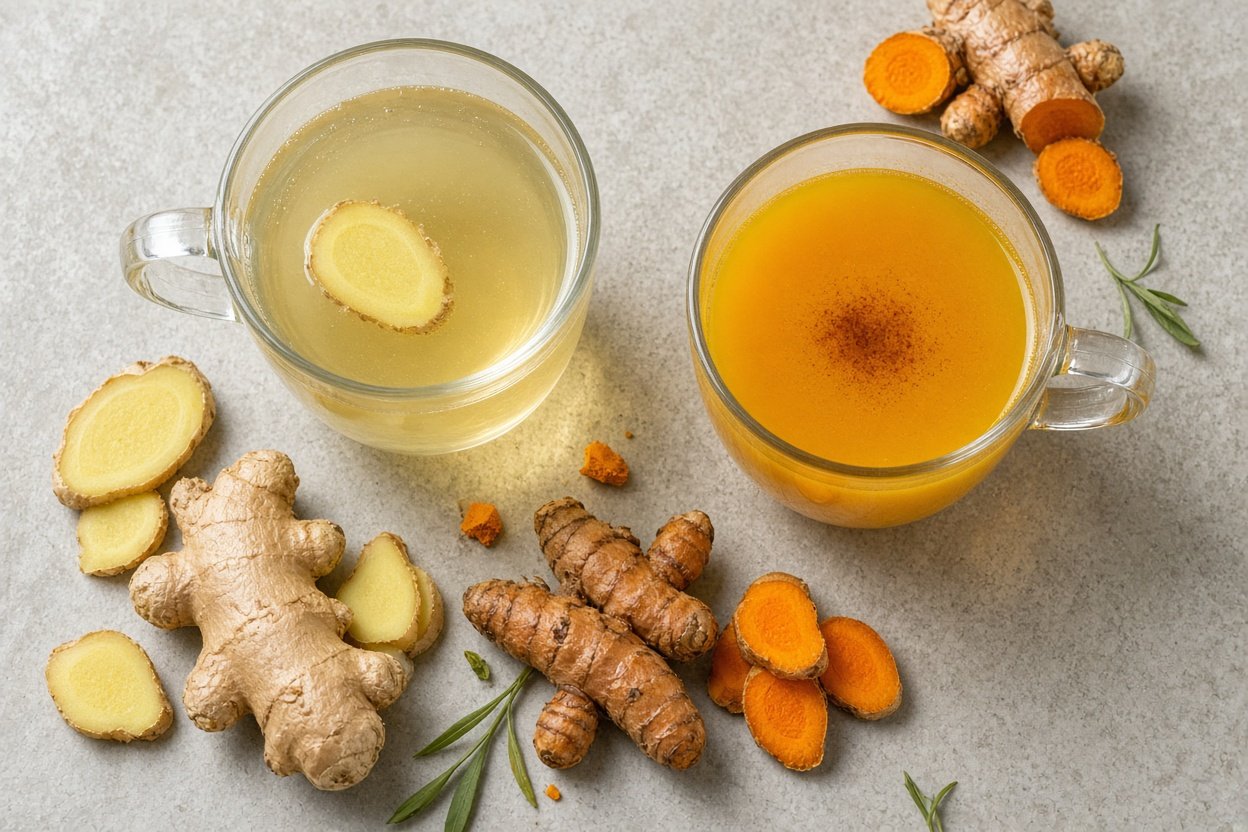
Ginger and turmeric are often mentioned in the same breath, and the ginger tea vs turmeric tea question comes up constantly for anyone new to herbal tea. Here’s how to decide which one fits what you’re actually looking for — or why our Strong Turmeric Ginger with Black Pepper Tea might mean you don’t have to choose at all.
Ginger Tea vs Turmeric Tea: Two Different Roles
Both are rhizomes with a long history in traditional wellness practices, but they lean toward different everyday uses, and understanding that difference makes it much easier to pick the right one for a given moment.
Ginger Tea: Best For
- Settling an upset stomach or easing nausea — an overview of systematic reviews found consistent evidence supporting ginger’s effect on nausea across a wide range of causes.
- A warming pick-me-up on a cold day.
- A sharper, spicier flavour profile that most people find easy to enjoy without needing anything added.

Turmeric Tea: Best For
- Supporting the body’s response to everyday inflammation — a randomized trial on curcuminoids found meaningful improvements in joint pain and function, though the doses used were more concentrated than a typical cup of tea.
- A milder, earthier, slightly bitter flavour that pairs well with milk.
- Golden-latte style drinks with milk and warming spices.
The Flavour Difference, Honestly
If you’ve never tried either, ginger is the easier entry point — sharp, peppery, and immediately recognisable, similar to biting into fresh root ginger. Turmeric is subtler and earthier, with a slight bitterness that some people need a session or two to appreciate, especially without milk or honey to round it out. Neither is objectively better; it comes down to what flavour profile you actually enjoy drinking regularly, since a tea you don’t like won’t become a habit no matter how well-researched it is.
Which One Should You Actually Pick?
If your main goal is settling your stomach after meals or easing nausea, ginger is the more direct choice. If you’re more focused on joint comfort or general inflammation support as part of a longer-term routine, turmeric — ideally with black pepper for absorption — is the better-suited option. If you’re not sure which category your goal falls into, it’s worth trying both separately for a week or two before committing to one.
Why Not Both?
You don’t have to choose one over the other — many people find the combination more effective and better-tasting than either root alone. A ginger turmeric blend balances ginger’s sharpness with turmeric’s earthiness for a well-rounded cup, while still delivering both roots’ individual benefits in one sitting rather than making you pick a lane.
What About the Black Pepper?
If you do go the combined route, a pinch of black pepper is worth including specifically for the turmeric side of the blend — its piperine content is well documented for improving how well the body absorbs curcumin, turmeric’s primary active compound. Our combined blend already accounts for this ratio, so there’s no need to measure anything yourself.
Our Recommendation
If you’re new to herbal tea, start with whichever flavour profile appeals to you, then experiment with a combined blend once you know what you enjoy. Most people who try both end up keeping ginger on hand for occasional stomach settling and turmeric — or the combined blend — as a more consistent daily habit.
Read More on the Combination
For a deeper look at why this pairing works so well together, our guide to ginger turmeric tea benefits covers the full picture, from flavour balance to absorption science.
What History Tells Us
Ginger has a longer standalone culinary history in more cuisines worldwide, while turmeric’s use is more concentrated in South Asian, Middle Eastern, and North African cooking and traditional medicine, particularly Ayurveda. That difference in history is part of why ginger tends to feel more immediately familiar to newcomers, while turmeric can feel like more of an acquired taste at first.
Price and Availability
Both roots are widely available and inexpensive compared to many other wellness ingredients, whether bought fresh, dried, powdered, or as a ready-made tea blend. Fresh ginger tends to be slightly easier to find in most supermarkets than fresh turmeric root, though dried and powdered turmeric is just as accessible as ginger in most places.
Which Is Gentler on a Sensitive Stomach?
For most people, ginger is the gentler of the two on a sensitive stomach, given its long history as a nausea remedy specifically. Turmeric in large amounts can occasionally cause mild stomach upset in sensitive individuals, particularly on an empty stomach, so starting with a smaller amount or drinking it alongside food is a reasonable approach if you’re trying it for the first time.
A Word on Supplements vs Tea for Either Root
If you’re specifically targeting a health concern rather than general everyday wellness, a concentrated supplement of either ginger or turmeric will deliver a more measured, higher dose than tea. Tea remains the better choice for a gentle, everyday habit, while supplements are better suited to a more targeted approach under guidance from a healthcare provider.
Trying Them Side by Side
If you genuinely can’t decide, brewing both on the same day — ginger in the morning, turmeric in the evening, or vice versa — is a simple way to compare them directly rather than relying on descriptions alone. Most people find they naturally gravitate toward one over the course of a week or two.
The Bottom Line
There’s no wrong answer in the ginger tea vs turmeric tea debate — both are gentle, well-tolerated, and backed by a reasonable body of traditional use and research for their respective strengths. The right choice comes down to what you’re hoping to get out of the cup and which flavour you’ll actually look forward to drinking regularly.
Who Should Be Cautious
Both roots are generally well tolerated, but turmeric can interact with blood-thinning medication, and high doses of either can cause mild stomach upset in sensitive individuals. Check with a healthcare provider if you’re pregnant, nursing, or managing a medical condition.
Browse our ginger and turmeric tea collection to compare both — or try them together.
What Most People Eventually Land On
After trying both for a while, many people end up keeping a box of each in the cupboard rather than committing permanently to one — ginger for when the stomach needs settling quickly, turmeric or the combined blend as the steadier daily habit. There’s nothing wrong with letting the day’s specific need decide which one you reach for.
One Last Practical Tip
If you’re buying fresh root rather than tea bags, look for firm, unblemished ginger and turmeric with smooth skin — softness or wrinkling is usually a sign the root has been sitting too long and will taste less vibrant once brewed.
This article is for general wellness information and isn’t a substitute for medical advice.