

Blog
Ginger Turmeric Tea Benefits: Why This Combo Works

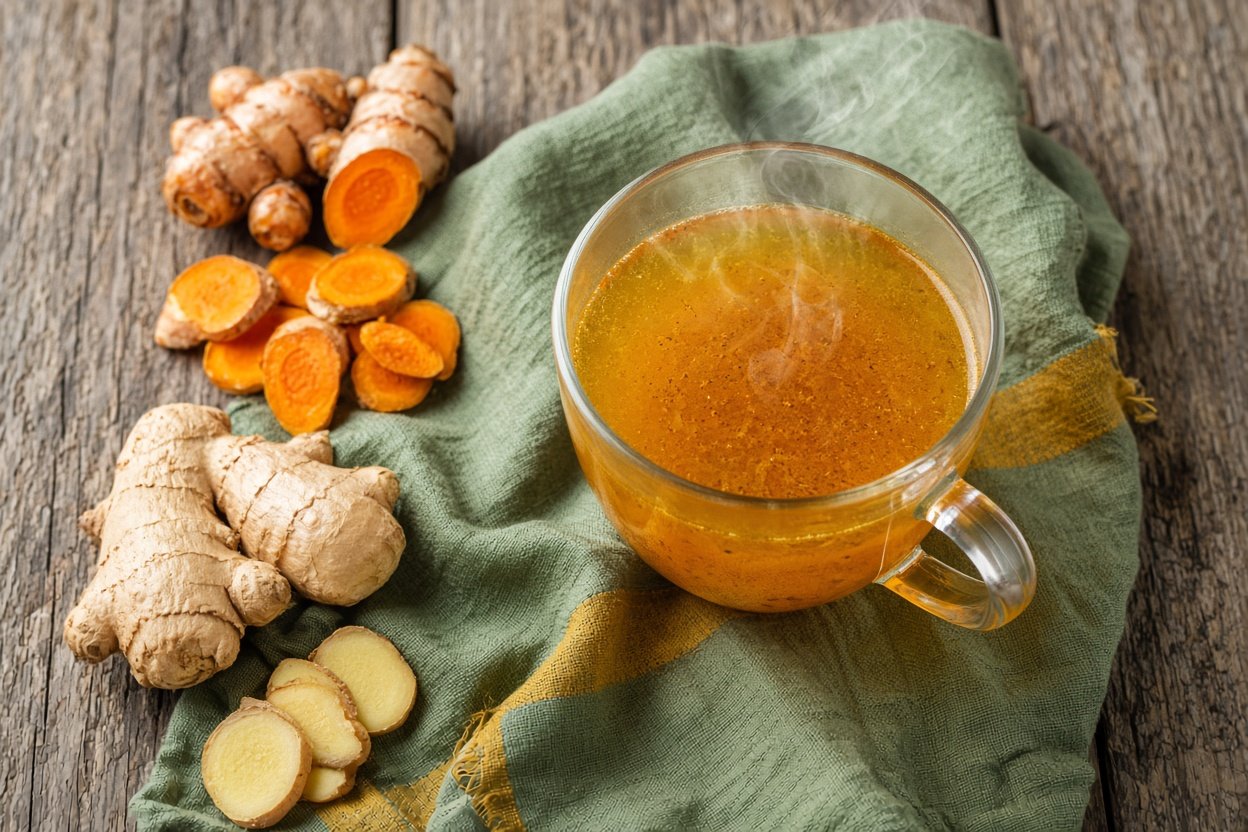
Ginger and turmeric have shared a teapot in traditional wellness practices for centuries, and the ginger turmeric tea benefits people talk about today explain why the pairing has found new life in blends everywhere. Both are rhizomes — root-like stems — prized for their warming, earthy flavour and their signature active compounds: gingerol in ginger, curcumin in turmeric. Our Strong Turmeric Ginger with Black Pepper Tea builds the classic combination into a single daily cup, and this guide walks through why the pairing works, what to actually expect from it, and how to brew it so you get the most out of both roots.
Two Roots, One Powerful Cup
On their own, each root carries its own wellness reputation. Ginger is best known for soothing digestion and settling an uneasy stomach, while turmeric is associated with supporting the body’s natural response to everyday inflammation. Neither is a miracle cure, but together they cover more ground than either does alone — which is part of why so many herbal tea drinkers reach for the combined blend rather than picking just one.

Why Pair Them Together?
Brewed side by side, the two roots complement each other in the cup as much as in their wellness roles. The sharp, peppery bite of ginger balances turmeric’s earthy, slightly bitter note, making for a rounder, more drinkable tea than turmeric brewed on its own. It’s a flavour pairing as much as a wellness one — most people find the combined blend easier to drink daily than a straight turmeric infusion.
What the Research Says About Ginger
Ginger’s reputation for settling the stomach isn’t just folklore. An overview of systematic reviews and meta-analyses indexed on PubMed found consistent evidence that ginger can help reduce nausea across a range of causes, from motion sickness to postoperative recovery. That’s the mechanism most people are tapping into when they reach for a warm ginger-based tea after a heavy meal.
Why Turmeric Needs a Partner
Turmeric’s curcumin content is genuinely well-studied, but there’s a catch: on its own, curcumin is notoriously difficult for the body to absorb. A classic pharmacokinetic study found that combining curcumin with piperine, the active compound in black pepper, meaningfully increased how much curcumin the body could actually take up. That’s exactly why a well-formulated turmeric tea rarely stops at just turmeric — a pinch of black pepper turns a good cup into a more effective one.
Ginger Turmeric Tea Benefits at a Glance
- Digestive comfort — a warm cup after meals is a popular way to ease bloating and settle the stomach.
- A gentle warming effect — well suited to colder mornings or an evening wind-down.
- A caffeine-free alternative to your usual coffee or black tea, any time of day.
- Better absorption — when black pepper is included, you’re getting more out of the turmeric than a plain infusion would offer.
How to Brew It Right
Steep for 5–8 minutes in freshly boiled water to draw out the full flavour and active compounds from both roots. Longer steeping extracts more of the beneficial compounds, so don’t rush it. Adding a slice of fresh lemon or a spoon of honey brightens the cup and adds its own comfort, especially in the colder months.
A Long History Before It Was Trendy
Long before “ginger turmeric shot” became a wellness aisle staple, both roots were everyday kitchen staples across South and Southeast Asian, Middle Eastern, and Caribbean cooking and traditional medicine. Turmeric has been used in Ayurvedic practice for thousands of years, often alongside black pepper and ginger in the same dish or drink — the pairing described here isn’t a modern invention so much as a rediscovery of something cooks and healers already knew.
Tea vs Fresh Root vs Capsules
You can get ginger and turmeric into your routine several ways — fresh root steeped at home, a ready-made tea blend, or a concentrated capsule. Tea sits in a useful middle ground: it’s gentler on the stomach than a concentrated capsule, easier to build into a daily ritual than remembering to take a supplement, and it delivers a meaningful dose of both roots in a form your body is already used to processing. Capsules can offer a more concentrated dose for people specifically targeting inflammation support, but for everyday digestive comfort and a caffeine-free alternative to your usual hot drink, a well-formulated tea does the job without the extra step.
How Often Should You Drink It?
Most people who build ginger turmeric tea into their routine drink it once or twice a day — commonly one cup in the morning to ease into the day, and one in the evening after dinner. Because it’s naturally caffeine-free, there’s no real concern about drinking it later in the day the way there would be with black tea or coffee. As with most herbal teas, consistency matters more than any single cup: the digestive and comfort benefits tend to show up as part of a regular habit rather than a one-off remedy.
Pairing It With the Rest of Your Routine
Ginger turmeric tea works well as a standalone habit, but it also pairs naturally with other digestion-focused choices throughout the day. If you’re building out a fuller routine around gut comfort, our guide to turmeric tea and inflammation goes deeper into the research behind curcumin specifically, including how dosage and consistency affect what you can realistically expect.
Common Questions About Ginger Turmeric Tea
Does it taste bitter? Turmeric on its own can taste slightly bitter and earthy, but ginger’s sharper, peppery flavour balances that out well. Most people find the combined blend far more palatable than turmeric brewed alone.
Can I drink it every day? Yes — for most healthy adults, a daily cup is a reasonable habit, similar to any other herbal tea. If you’re on medication or managing a health condition, it’s worth checking with a healthcare provider first.
Will it stain my mug? Turmeric’s vivid colour can leave a slight tint on light-coloured mugs and teaspoons. It’s harmless, but worth knowing before you brew your first cup in your favourite white mug.
Getting Started If You’re New to It
If this is your first time trying the combination, start with one cup a day rather than jumping straight into a twice-daily habit — this gives your palate time to adjust to turmeric’s earthier notes and lets you gauge how your digestion responds before making it a bigger part of your routine. Most people find they’ve adjusted within a week and are reaching for a second daily cup naturally by the following week.
A Quick Recap of the Ginger Turmeric Tea Benefits
Ginger settles the stomach, turmeric supports the body’s inflammatory response, and black pepper helps you absorb more of turmeric’s curcumin — three complementary roles in one warming cup. Brewed consistently, it’s a simple, caffeine-free habit worth keeping stocked in the cupboard year-round, not just when the cold weather rolls in.
Who Should Be Cautious
Turmeric and ginger are both generally well tolerated, but turmeric can interact with blood-thinning medication, and high doses of either root can cause mild stomach upset in some people. If you’re pregnant, nursing, or managing a medical condition, it’s worth checking with a healthcare provider before making it a daily habit.
Ready to try the combination for yourself? Pick up our Strong Turmeric Ginger with Black Pepper Tea and build it into your morning or evening routine.
This article is for general wellness information and isn’t a substitute for medical advice. Speak with a healthcare provider if you are pregnant, nursing, taking blood-thinning medication, or managing a medical condition.