
Blog
Raw Honey vs Supermarket Honey: What Is the Difference?

What Does “Raw” Actually Mean?
Walk down the honey aisle of any UK supermarket and you will find rows of clear, golden, perfectly runny jars. Next to them, at specialist shops and online, you will find honey labelled raw, unfiltered or unpasteurised, often cloudy, thick and sometimes solid. They are all honey, but they have been handled very differently on their way to the jar.
Raw honey is honey that has not been heated at high temperatures or heavily filtered. It is strained just enough to remove bits of wax and debris, and then jarred. Because nothing has been done to make it look uniform, you see it as it is, including tiny particles of pollen and natural variation in colour and texture.
Supermarket honey, by contrast, is usually heat-treated and finely filtered so that it stays clear and runny for months on the shelf. It is not harmful, but the process changes its look, its texture and some of its flavour.
The Main Differences
| Raw honey | Typical supermarket honey | |
|---|---|---|
| Heat treatment | Not heated, or only gently | Usually pasteurised or heat-treated |
| Filtering | Lightly strained | Often finely filtered |
| Appearance | Cloudy, may be thick or creamy | Clear and runny |
| Flavour | Varied, more complex | Mild and consistent |
| Origin | Often a single source or region | Often a blend from several countries |
| Crystallisation | Happens naturally and often | Delayed by processing |
Why Does Raw Honey Crystallise?
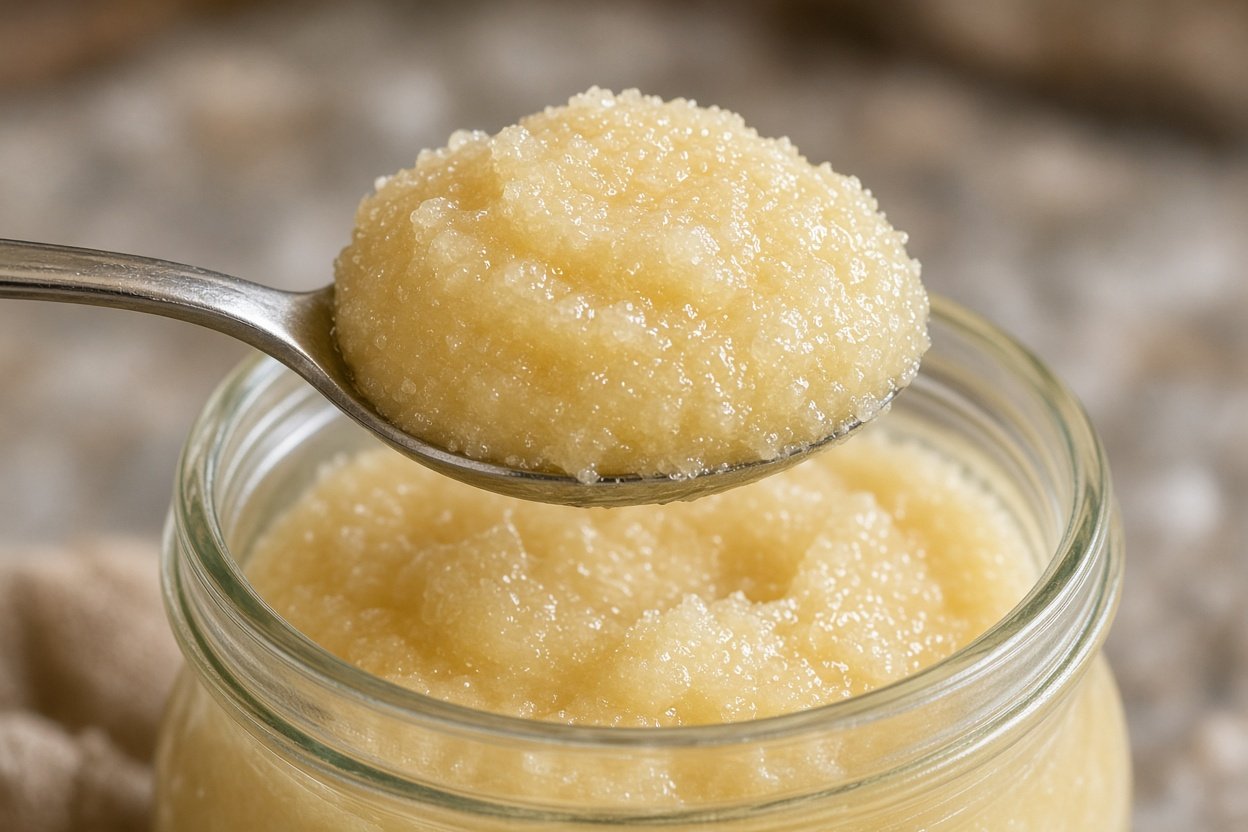
This is the most common surprise for people trying raw honey for the first time. All natural honey is mostly sugar dissolved in a small amount of water, and over time the sugars, particularly glucose, form crystals. Raw honey crystallises faster because it still contains tiny particles of pollen and wax that act as seeds for crystals.
Crystallisation is not a sign that your honey has gone off. It is actually a good sign that the honey is natural. To make it runny again, stand the sealed jar in a bowl of warm water, not boiling, for 15 to 20 minutes and stir. Avoid the microwave, which can overheat it and damage the flavour.
How Do They Taste Different?
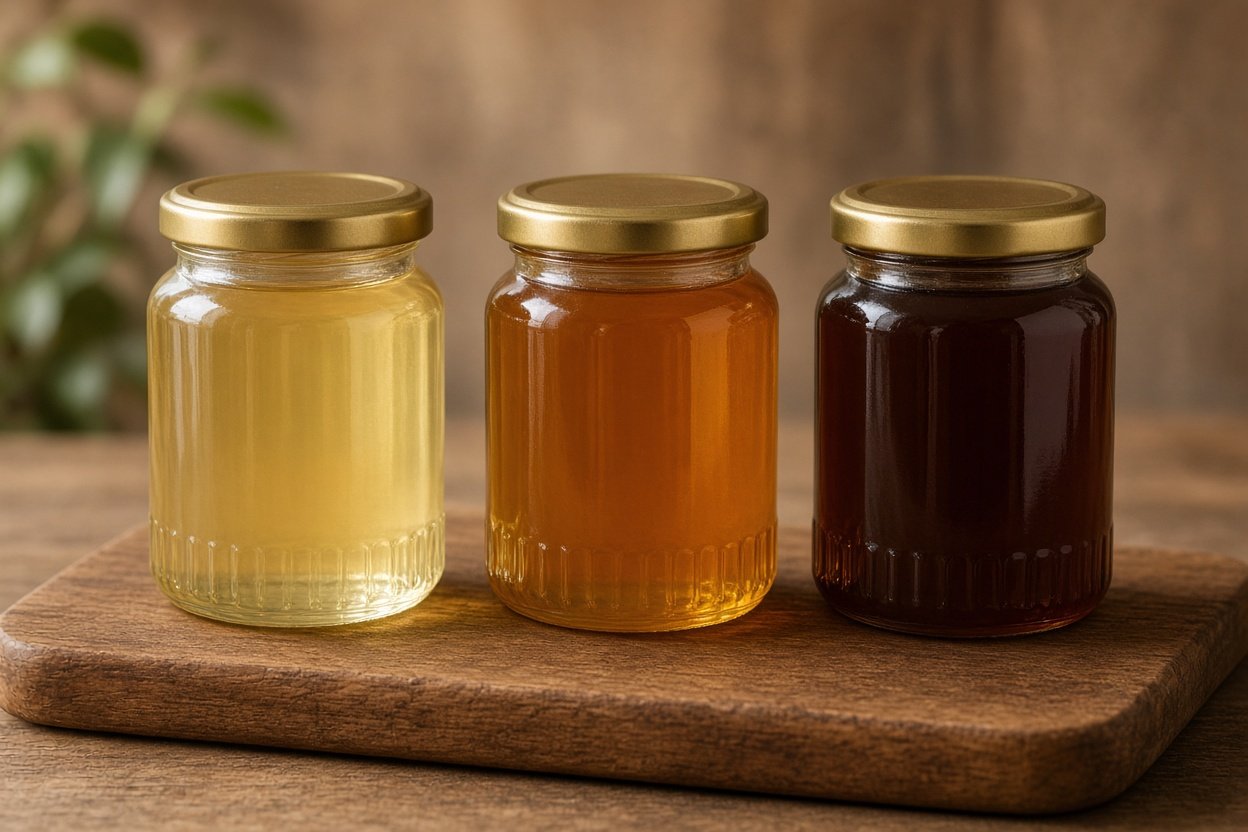
Heat and filtering smooth out honey’s flavour. Raw honey keeps the character of the flowers or forest the bees visited, so you will notice real differences between varieties:
- Acacia honey is very light, delicate and slow to crystallise. Our Pure Raw Acacia Honey is a good one for tea and drizzling.
- Wildflower honey is fuller and more floral, with a flavour that changes from batch to batch. Try our Organic Raw Wildflower Honey.
- Forest honey is darker, richer and less sweet. Our Raw Wild African Forest Honey is a bold choice for toast and marinades.
Our raw honey guide compares these three side by side.
Is Raw Honey Healthier?
This is where it pays to be careful. Raw honey keeps more of its natural pollen, enzymes and plant compounds than heavily processed honey, and these compounds have attracted scientific interest. But the evidence for dramatic health benefits is limited, and honey is still mostly sugar. A fair summary is that raw honey is a more natural, more flavourful product, and a good way to sweeten food in small amounts, but it is not a health food in the way some marketing suggests.
If you are managing blood sugar or a medical condition, treat honey like any other sugar and ask your doctor how much suits you. And never give honey to babies under 12 months old.
How to Choose a Good Raw Honey
Labels can be confusing, so here is what to look for:
- Clear wording: “Raw”, “unfiltered” and “unpasteurised” are good signs. Be wary of vague phrases such as “natural” or “pure” on their own, which have no strict meaning.
- Origin stated: A good raw honey tells you where it came from. A vague “blend of EU and non-EU honeys” suggests a mass-market product.
- The right texture: Raw honey can be runny, creamy or solid depending on the variety and the time of year. Both are normal.
- A reliable seller: Buy from a shop that can tell you about the honey and its source.
How to Use Raw Honey
Raw honey is delicious in everything you would normally use honey for, and a few places where it really shines:
- Stirred into tea once it has cooled slightly, since very hot water dulls the flavour.
- Spread on toast, crumpets or sourdough with butter.
- Drizzled over porridge, yoghurt and fruit.
- Used in dressings, marinades and glazes for roast vegetables and meat.
For more inspiration, see our guide to five ways to use raw honey beyond your tea. If you love honey in tea, our ginger honey tea guide is a great place to start.
Does Heating Honey Really Matter?
It matters more than most people think, mainly for flavour. Honey contains delicate aromatic compounds that give each variety its character, and many of them are sensitive to heat. Heating honey to keep it runny and to destroy yeasts can flatten those flavours and darken the colour. It also reduces some of the natural enzymes found in fresh honey. That does not make heat-treated honey unsafe, but it explains why raw honey tastes more interesting and why many people prefer it as a spread or a stirred-in sweetener rather than just a cooking ingredient.
The same logic applies at home. If you stir raw honey into a boiling-hot drink, you lose much of what you paid extra for. Let your tea or coffee cool for a minute or two first, and you will taste the difference.
Is Raw Honey Worth the Price?
Raw honey usually costs a little more than supermarket honey, and the question is fair. It depends on how you use it. If you only need a sweetener to bake with, an inexpensive honey is fine. But if you eat honey on toast, in porridge or stirred into tea, you will notice the flavour, and because raw honey tends to be richer, many people find a smaller spoonful is enough. Buying a jar from a seller who tells you where it came from also means you know what you are eating, which is part of the value.
Start with a small jar of one variety, see whether you notice the difference, and then decide whether you want to explore more.
Common Questions
Is supermarket honey fake? No. Most is real honey, but it is often a blend that has been heated and filtered. Some cheap honeys have been the subject of authenticity concerns, which is another reason to buy from a seller who states the origin.
Should I keep raw honey in the fridge? No. A cool cupboard is better, because the cold speeds up crystallisation.
Can I cook with raw honey? Yes, but high heat will change its flavour and remove some of the qualities that make it special, so it is best added at the end.
Which raw honey should I try first? Acacia is the mildest and the easiest introduction. Wildflower is a good middle ground, and forest honey is the boldest.
Does raw honey go off? Honey keeps for a very long time if stored sealed in a cool, dry place. It may darken or crystallise with age.
Ready to Try Raw Honey?
If you are new to it, start with the Pure Raw Acacia Honey for something gentle, then explore the Wildflower and African Forest varieties as you get a feel for the differences.
This article is for general information and is not a substitute for medical advice. Honey should not be given to infants under 12 months old.